
The Amazonian COP: A Defining Moment for the Science Panel for the Amazon
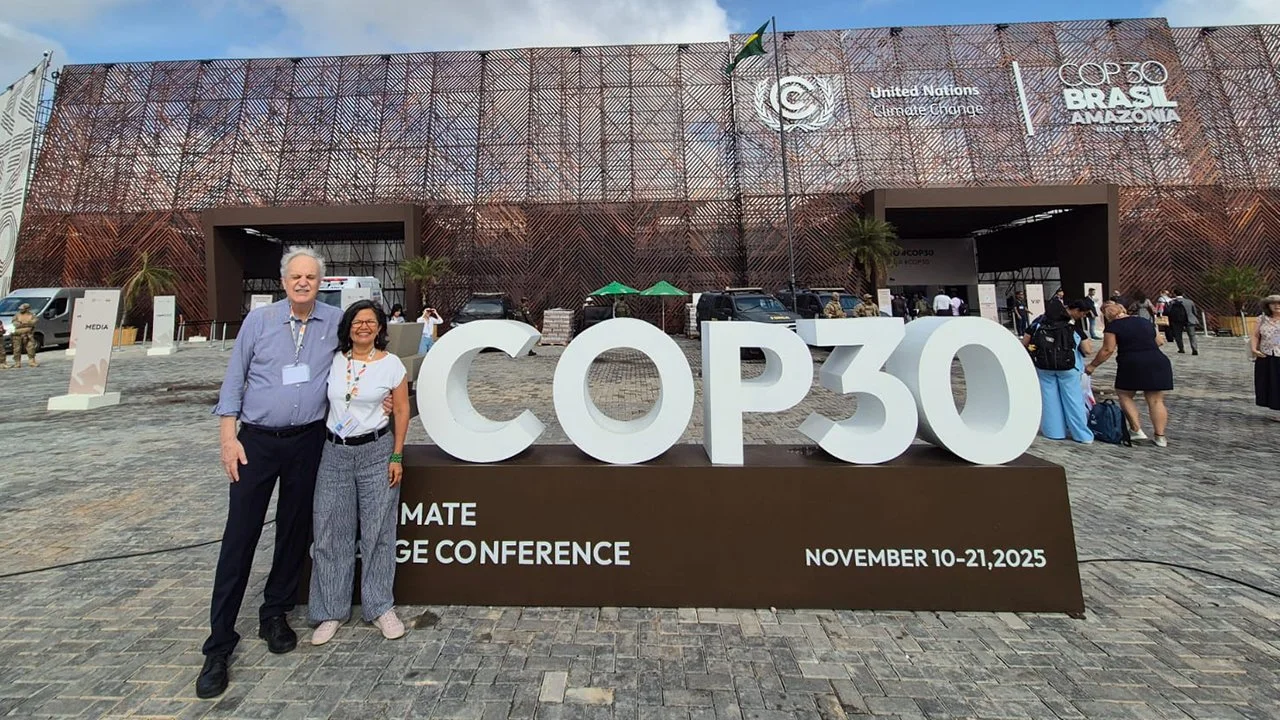
SPA Co-Chairs Carlos Nobre and Marielos Peña-Claros at COP30.
From November 10 to 21, 2025, the first-ever Conference of the Parties to the United Nations Framework Convention on Climate Change held on Amazonian soil took place in Belém. COP30 aimed to determine how to implement existing global climate commitments, while the location itself elevated the centrality of tropical forests, biodiversity, and the leadership of Indigenous Peoples and of Local Communities.
Belém became a vibrant meeting point for more than 55,000 in-person participants — delegates from Parties, observers, journalists, and staff — along with over 5,000 registered remote attendees. In this dynamic setting, the Science Panel for the Amazon (SPA) presented one of its most important contributions to global climate dialogue: the Amazon Assessment Report 2025 – Connectivity of the Amazon for a Living Planet (AR2025).
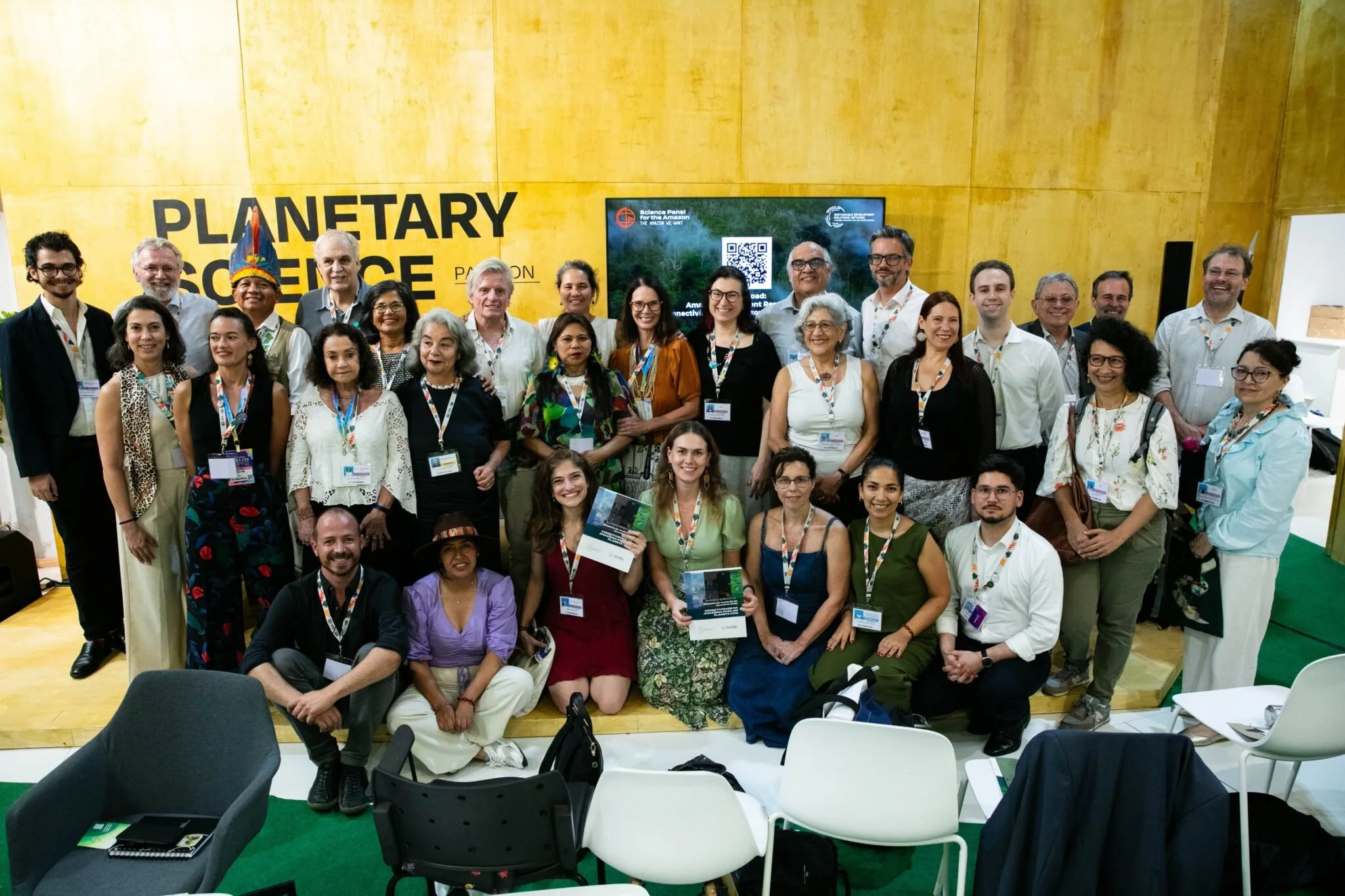
SPA Authors, Leadership and Secretariat members at the AR2025 Launch.
Launching the Amazon Assessment Report 2025
The AR2025 is the result of more than two years of collaborative work, driven by the vision of Belém as a strategic milestone for the SPA. Coordinated by a team of experts and supported by over 140 authors, dozens of reviewers, and a dedicated staff, the report consolidates deep scientific knowledge and diverse perspectives to articulate why Amazonian connectivity is essential for the resilience of the Basin and the stability of global climate.
The official launch took place on November 11 in the Planetary Science Pavilion, featuring lead authors for each of the eight chapters of the report; SPA Strategic Coordinator Emma Torres; Co-Chairs Dr. Carlos Nobre and Marielos Peña-Claros; and COP30 Special Envoys Sineia do Vale Wapichana and Marcelo Behar. Remarks were also shared by Martín von Hildebrand, Secretary-General of the Amazon Cooperation Treaty Organization (ACTO) and SPA author.
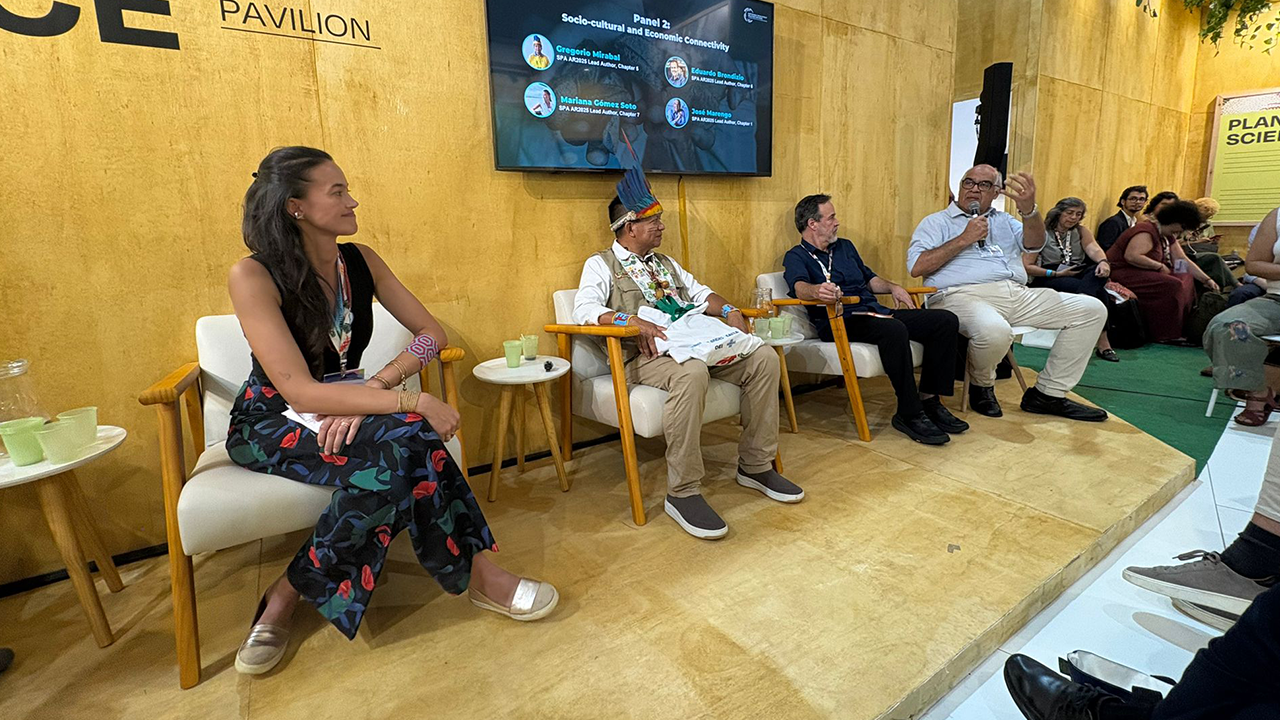
SPA Lead Authors Mariana Gómez Soto, Gregorio Mirabal, Eduardo Brondizio and José Marengo, at the AR2025 launch event.
“The report is a collective effort that brings together generous contributions from multiple voices and perspectives under one shared priority: connectivity. It was a pleasure to work alongside scientists guided not only by their knowledge but also by their hearts,” said Mariana Gómez Soto, Lead Author of Chapter 7 on Socio-bioeconomies.
The AR2025 explores the ecological, socioeconomic, and cultural interdependencies that shape the region, underscoring that conserving ecological and sociocultural connections is fundamental to safeguarding the Amazon and confronting the global climate crisis. It also features a series of Calls to Action that highlight solutions currently under discussion or in implementation to address the most urgent challenges and sustain or restore Amazonian connectivity across different scales and timeframes.
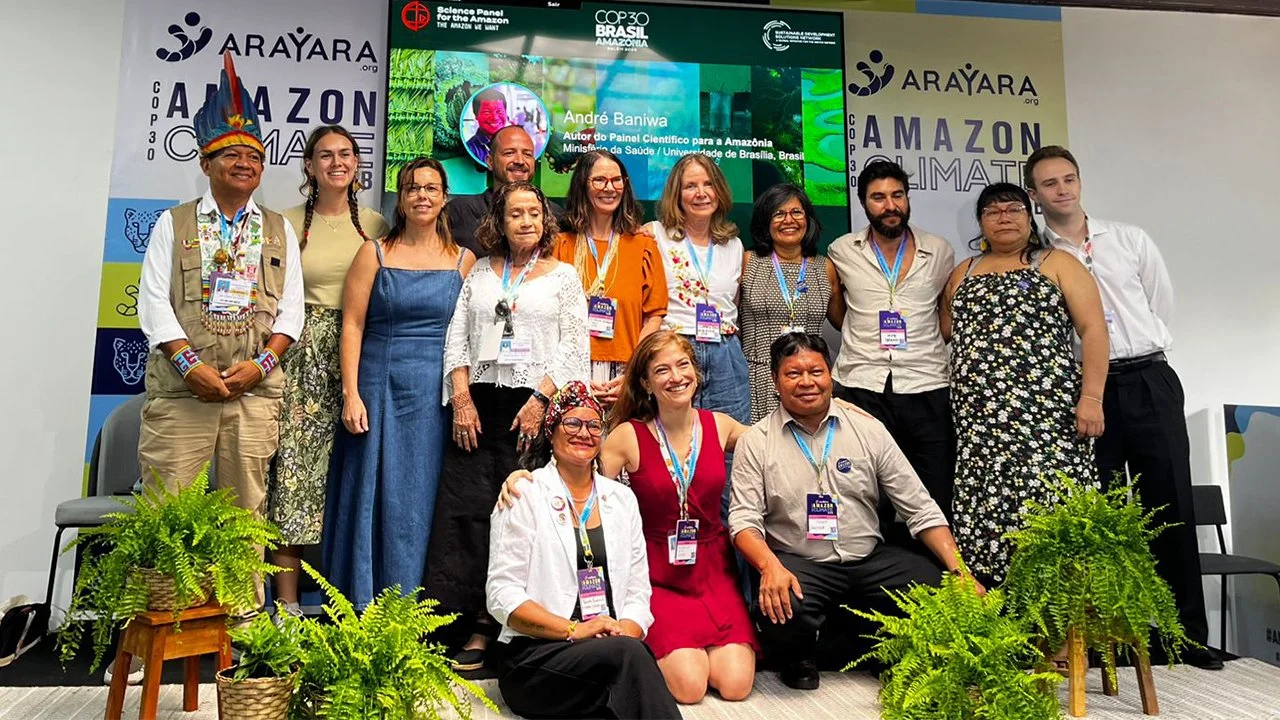
AR2025 Synthesis for Indigenous Peoples, Local Communities and Afrodescendant Peoples launch event.
Complementing the report, the SPA launched the Synthesis for Indigenous Peoples, Local Communities and Afrodescendant Peoples on November 11 at the Amazon Climate Hub, with the presence of distinguished Indigenous and local leaders, including AR2025 Authors José Gregorio Díaz Mirabal, André Fernando Hippatari Baniwa and Maria Páscoa Sarmento.
COP30: A Hub for Alliances and Regional Collaboration
Beyond the AR2025 launch, COP30 enabled the SPA to expand its presence and influence. The Panel co-organized more than 15 events, and its leadership, members, and authors participated in dozens more, bringing SPA scientific findings to multiple strategic audiences.
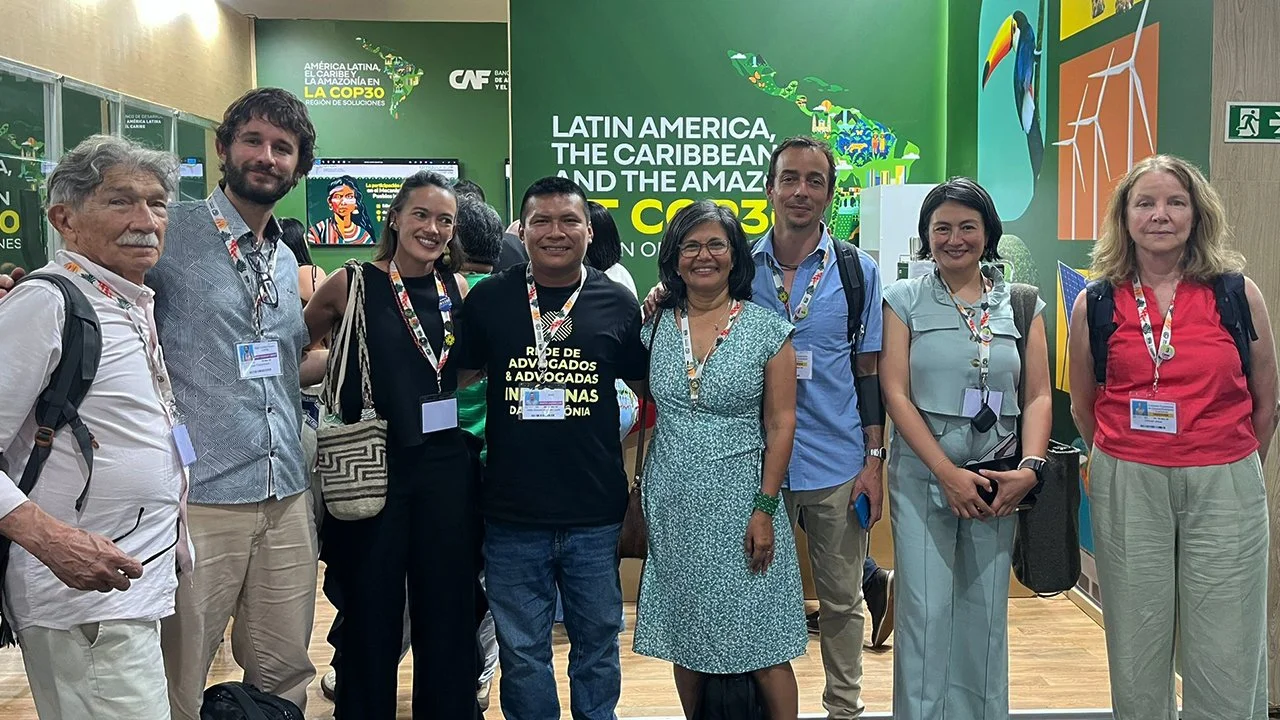
Representatives from the SPA, ANA, RAISG, and AAA.
The SPA also joined regional allies such as the Amazon Waters Alliance (AAA), the North Amazon Alliance (ANA), and the Amazon Network of Georeferenced Socio-Environmental Information (RAISG), with whom it co-launched a collaborative connectivity toolkit. This joint effort brought together resources developed by each organization to promote a shared understanding of Amazonian connectivity.
Reflecting on this collaboration, Mariana Gómez Soto noted: “For me, the SPA’s participation in COP30 is a clear testament to the warmth of its team and to the panel’s willingness to weave collaborative action around a common purpose. From the North Amazon Alliance, we convened the SPA, the Amazon Waters Alliance, and RAISG to jointly advance the banner of connectivity as regional civil society networks.”
The SPA also worked closely with the UN Sustainable Development Solutions Network (SDSN) Science Panels for the Congo Basin (SPCB) and for Borneo (SPB), both of which were presenting the Executive Summaries of their first assessment reports. On November 12, discussions focused on joint announcements from the three panels, highlighting the importance of South-South cooperation. On November 15, in collaboration with the University of Exeter and the Met Office Hadley Centre, leaders from all three regions underscored the centrality of science and global collaboration in advancing the Paris Agreement. Together, more than 900 scientists contributed to the three assessments — a powerful unified voice from the global south.
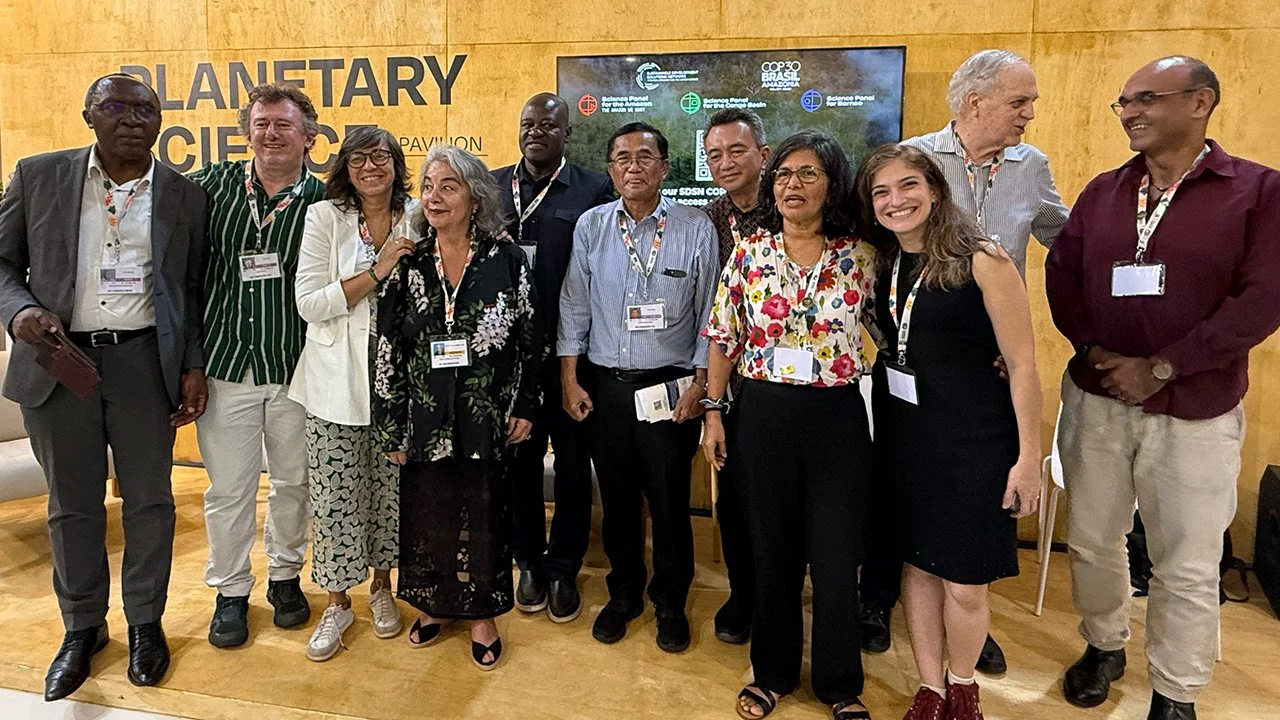
Members of the Science Panels for the Amazon, Congo Basin and Borneo.
Youth Voices: Clear and Determined
COP30 was also the stage for the launch of the Amazon Youth Manifesto, developed by the SPA’s Youth Advisory Committee (YAC). Events were held on 15 November at the Children and Youth Pavilion in the Blue Zone and on 18 November at Cas’Amazonia in the Belém Historic District. The manifesto emerged from five participatory workshops with more than 200 young leaders and scientists from all Amazonian countries. It presents a regional vision for Amazonian connectivity grounded in youth perspectives. YAC members also participated in multiple other events, reinforcing the presence and influence of Amazonian youth in climate negotiations.
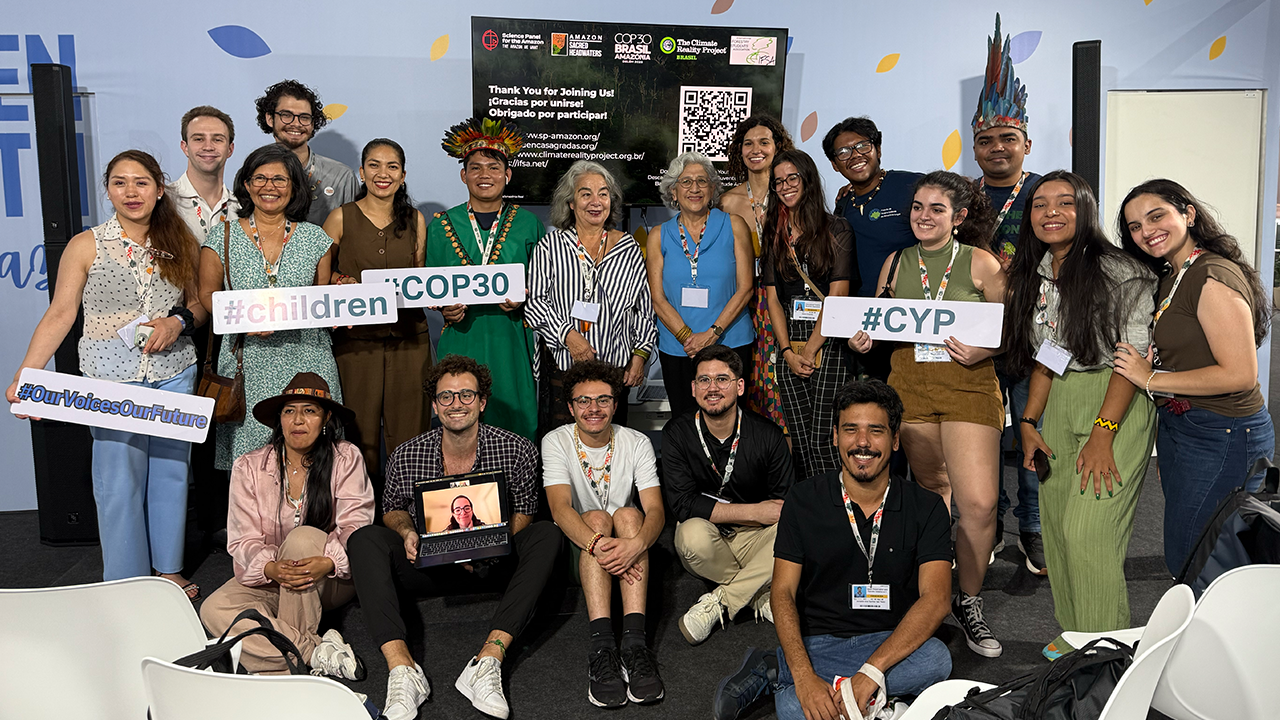
Amazon Youth Manifesto launch event at the Children and Youth Pavilion.
“The AR2025 and the Youth Manifesto are complementary: the AR2025 delivers rigorous science and evidence-based solutions, while the Manifesto brings the urgency and aspirations of new generations. Together, they strengthen the call to conserve the Basin and place Amazonian connectivity at the center of climate discussions,” said Emma Torres, SDSN Vice President for the Americas and SPA Strategic Coordinator.
Impact: Media Reach and Scientific Visibility
SPA’s participation generated extensive media coverage at national, regional, and international levels, with 150 documented mentions to date. The launch of the AR2025 and its core messages received broad attention across major outlets, including Agência Brasil, ANSA Latina, Down To Earth and O Povo). Over 60 articles referenced SPA directly, with several featuring interviews with SPA Leadership and members, notably Co-Chairs Carlos Nobre and Marielos Peña-Claros as well as Lead Authors. Examples include coverage by the Financial Times, BBC Mundo, CNN, Deutsche Welle, Estadão and France 24.
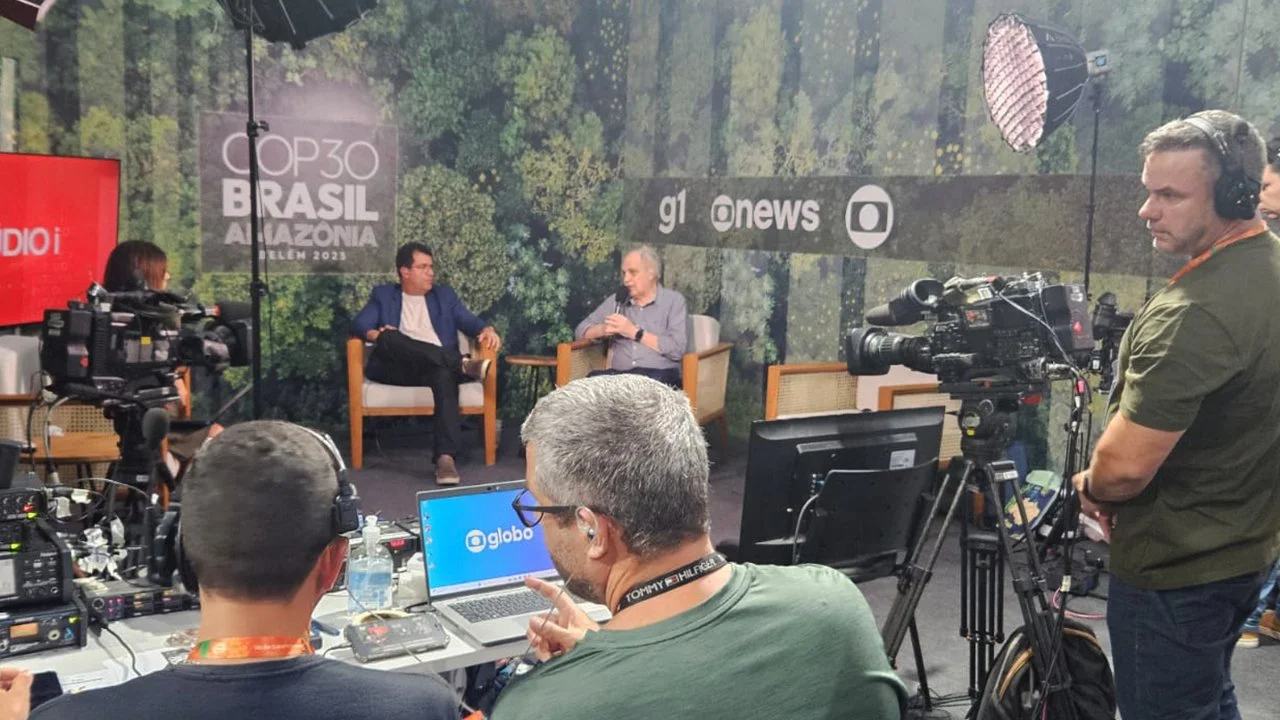
Dr. Carlos Nobre, SPA Co-Chair, being interviewed at COP30.
Discussions around illegal activities, highlighted in Chapter 2 of the AR2025, also gained strong visibility in Brazilian media. Coverage appeared in outlets such as O Globo, Agenda do Poder and Boletim RJ. Chapter 2’s prominence aligns with the fact that COP30 discussions referenced the need to combat organized crime. The SPA has long raised this concern, making the heightened visibility particularly meaningful.
News coverage included stories on the Three SDSN Science Panels (Scoop, Oxford Nature, Panamá 24) and on the launch of the Amazon Youth Manifesto (Scoop, Friulisera). SPA’s participation in WWF’s “Amazon League” communications campaign generated additional press attention.
Outcomes: SPA’s Contributions at COP30
1. Positioning Amazonian Connectivity
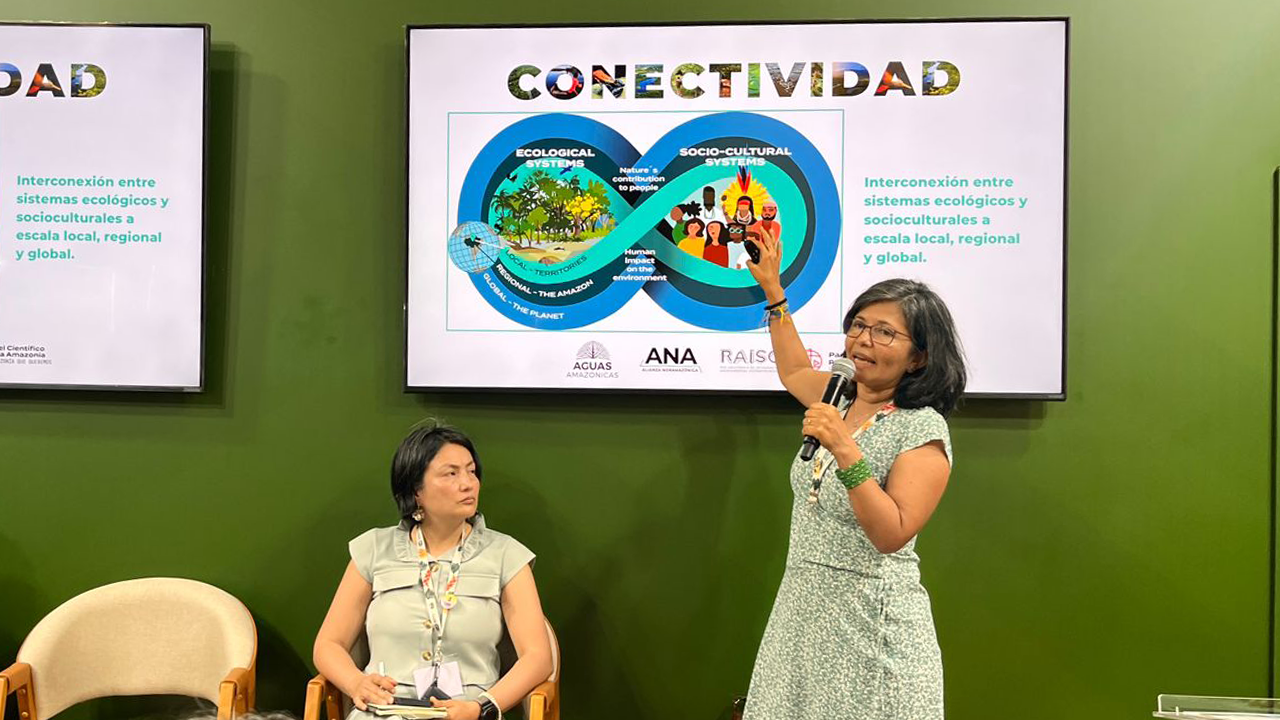
One of SPA’s most significant achievements at COP30 was the consolidation and recognition of Amazonian connectivity as a central solution to the climate crisis. The concept resonated widely, captured strong media interest, and gained traction among partner organizations and decision-makers. SPA’s collaborative messaging with regional allies helped amplify this narrative and reach broader audiences.
2. Strengthening Ties with Indigenous Peoples and Local Communities
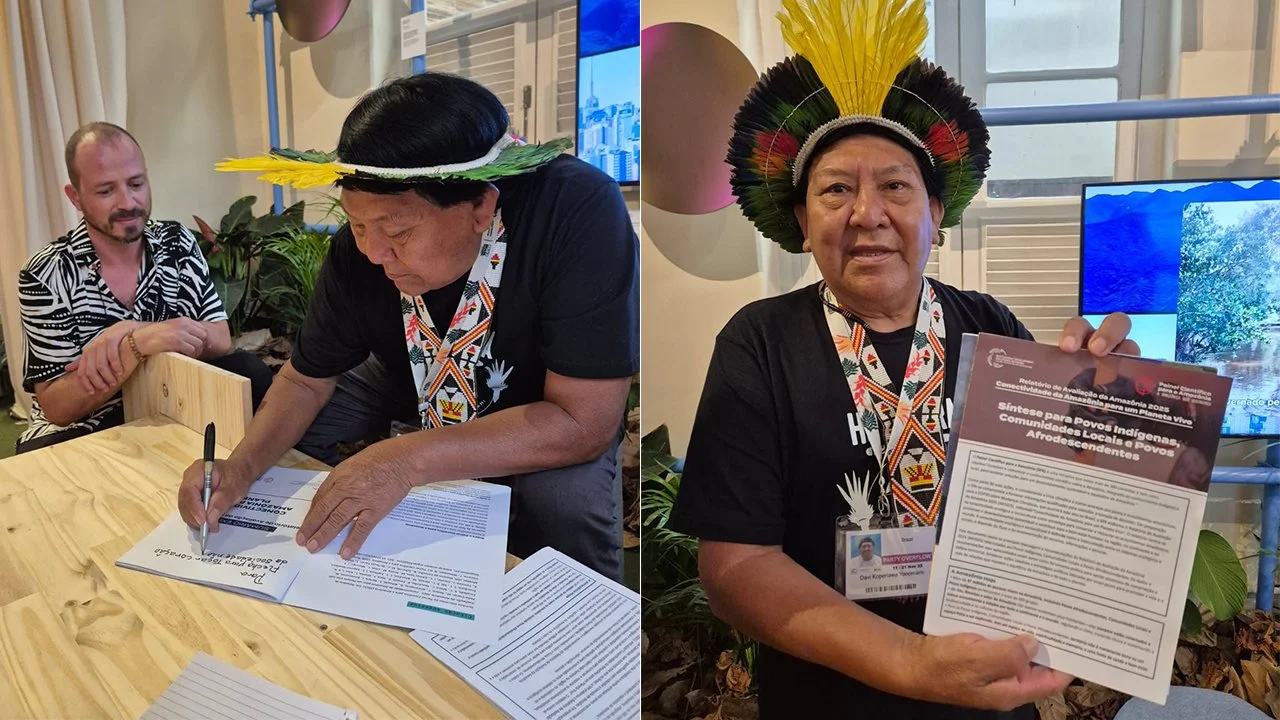
COP30 saw an unprecedented presence of Indigenous and local leaders. For SPA, this participation is fundamental to its mission of weaving together Western science with Indigenous and Local Knowledge. Through dialogues, joint events, and relationship-building, the SPA deepened its engagement with Indigenous Peoples, Afrodescendant Peoples, and Local Communities — a core pillar of the Panel’s long-term strategy.
3. A New Era of Cooperation with ACTO
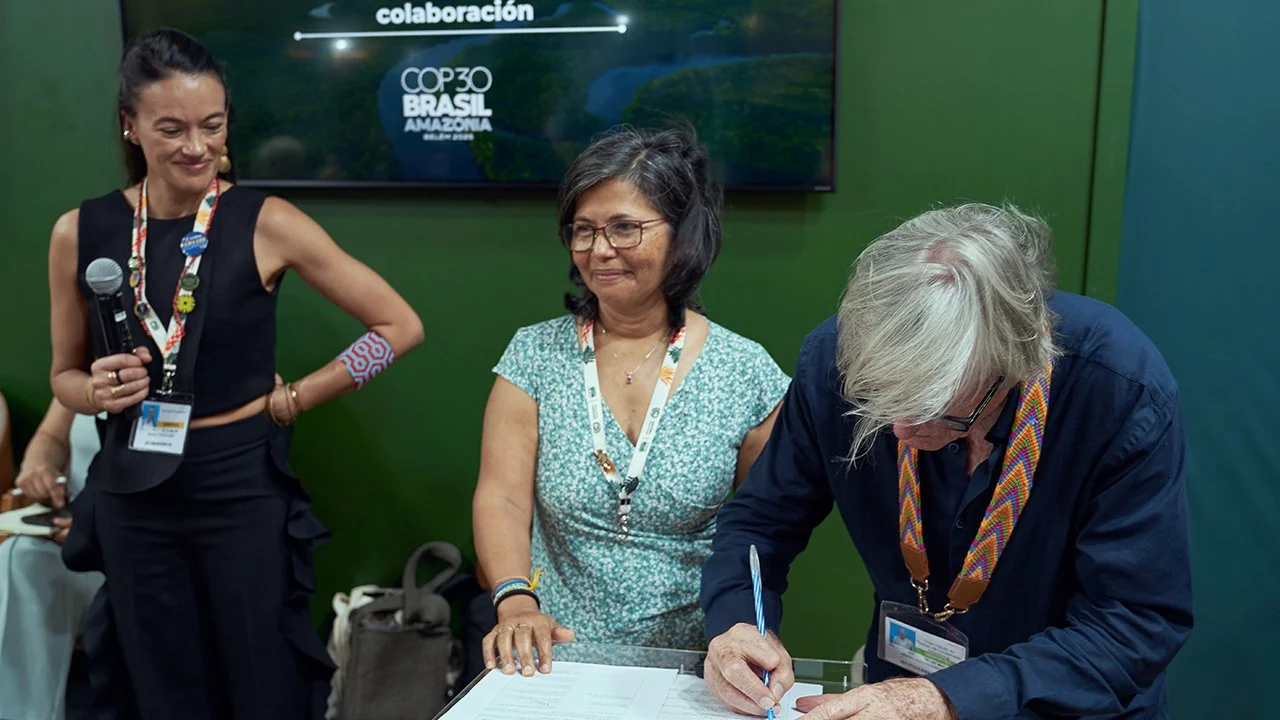
On 15 November, SPA Co-Chairs Carlos Nobre and Marielos Peña-Claros, together with Strategic Coordinator Emma Torres, signed a Memorandum of Understanding with the Amazon Cooperation Treaty Organization (ACTO), represented by Secretary-General Martín von Hildebrand.
The agreement establishes a framework for scientific and technical collaboration to support evidence-based decision-making, coordinated research, and complementary actions that advance the conservation and sustainable development of the Amazon. It marks the beginning of a deeper dialogue between SPA and intergovernmental policymakers.
Strategic Vision Moving Forward
SPA is now preparing its strategic plan for the coming years, building on the momentum generated in Belém:
i) maximizing the visibility of the AR2025;
ii) advancing key emerging themes from COP30: particularly sustainable cities, socio-bioeconomy, and water;
iii) strengthening alliances with organizations such as ACTO, COICA, the Amazon Network of Networks (Red de Redes Amazónicas), AAA, ANA, RAISG, WWF, and others; and
iv) continuing to contribute to discussions on innovative finance for tropical standing forests, including support for the Tropical Forever Forest Facility.
Although COP30 did not secure binding agreements on the phase-out of fossil fuels, SPA will closely monitor progress on proposed roadmaps, including:
i) accelerating the transition to zero fossil fuels with net-zero emissions by 2040; and
ii) achieving zero deforestation by 2030.
The continued COP presidency of Ambassador André Aranha Corrêa do Lago until October 2026 offers an opportunity for deeper contributions from the SPA, the SPCB, and the SPB in preparation for COP31 in Türkiye, considering the importance of the three-panel tropical forest vision at COP30. As population growth and environmental pressures intensify across tropical regions, advancing sustainable forest models will be essential.
With strengthened alliances, expanded visibility, and renewed commitment to scientific collaboration, SPA leaves COP30 with a clear mandate: to continue leading the conversation on Amazonian connectivity, elevate the role of science in global climate negotiations, and deepen engagement with the peoples who have safeguarded the Amazon for centuries.
All this work continues on the road to COP31, moving toward a more resilient and sustainable future, ever closer to #TheAmazonWeWant.

SPA Authors and Secretariat members celebrating the launch of the AR2025.
