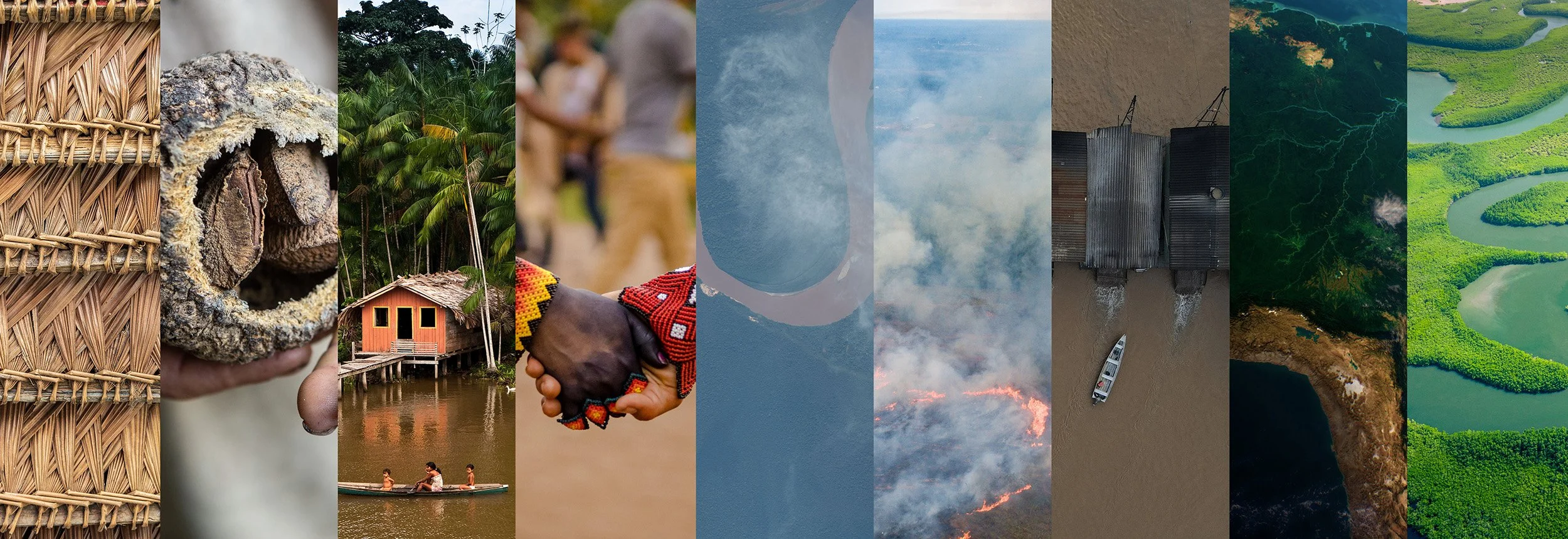
The 2025 Amazon Assessment Report of the Science Panel for the Amazon, entitled “Connectivity of the Amazon for a Living Planet”, brings sciences together that support ecological and sociocultural connectivity as the key strategy to conserve Amazonian ecosystems, advance sustainable development, and contribute to human and environmental well-being. Ecological and sociocultural connectivity is defined as the interconnectedness among ecological and social systems, and it describes the flow and movement of resources, information, and people within and across geopolitical borders.
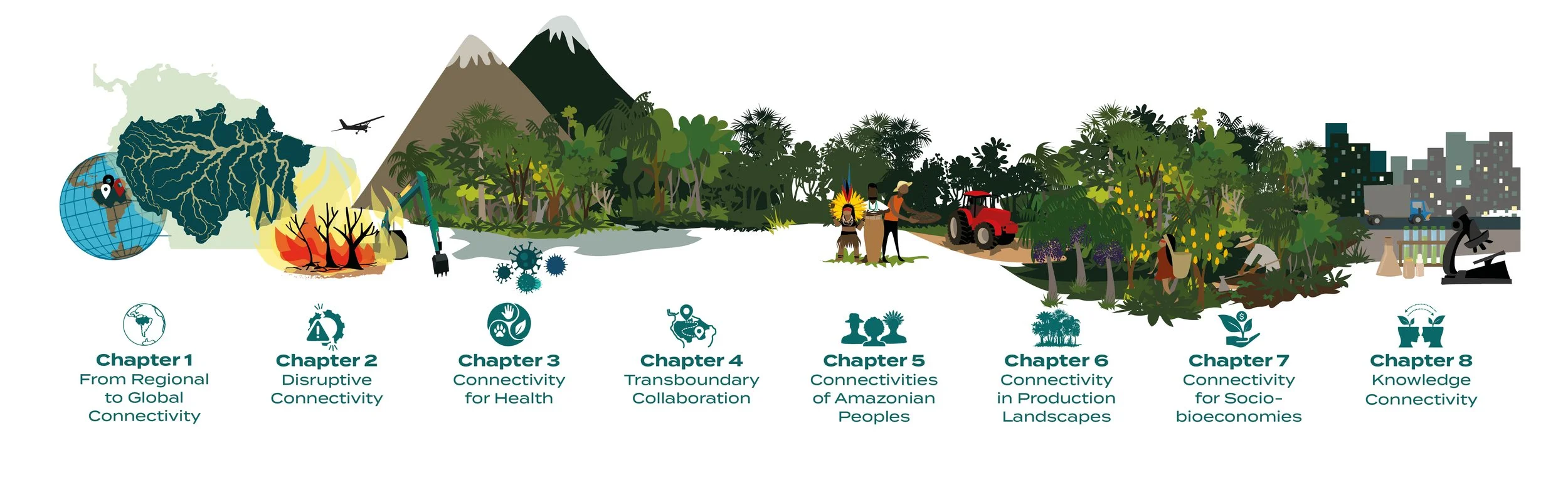
In this report, we focus on eight dimensions of connectivity, devoting a chapter to each: regional to global connectivity (Chapter 1), disruptions to connectivity (Chapter 2), connectivity for health (Chapter 3), transboundary collaboration (Chapter 4), the connectivity of Amazonian peoples (Chapter 5), connectivity in production landscapes (Chapter 6), connectivity for socio-bioeconomies (Chapter 7), and knowledge connectivity (Chapter 8). Each chapter is followed by associated Calls to Action—short documents focusing on specific problems that need to be solved and on examples of solutions currently being implemented in the Amazon by diverse actors.
The Executive Summary highlights the key findings of the 2025 Amazon Assessment Report, organized into three sections. The first section identifies key underlying drivers (current economic models, illicit activities, ineffective governance, and global climate change) that are negatively affecting the Amazon’s connectivity. The second section highlights the risks these drivers present to ecological and social systems in the Amazon. Finally, in the last section, we provide five overarching recommendations that highlight pathways forward for conserving the Amazon, avoiding tipping points, and contributing to sustaining a living planet while strengthening the Amazonian peoples' well-being, knowledge, and rights.
Marielos Peña-Claros
Forest Ecology & Management group, Wageningen University & Research, Wageningen, The Netherlands marielos.penaclaros@wur.nl
Carlos Nobre University of São Paulo, São Paulo, SP, Brazil cnobre.res@gmail.com
Nina Hylkje Witteveen Forest Ecology & Management group, Wageningen University & Research, Wageningen, The Netherlands n.h.witteveen1995@gmail.com
Abstract
The Amazon is under threat from deforestation, environmental degradation, and climate change, with changes happening at unprecedented rates. The conservation of the Amazon requires an integrated, transdisciplinary approach that considers the region’s deep interconnections—across geological systems, climate systems, ecosystems, peoples, and governance systems—to shape an effective, inclusive path forward through sustainable development. This assessment report aims to provide science-based, actionable solutions that can conserve and restore healthy Amazonian environments, societies, and economies. We focus on maintaining and restoring the region’s ecological and sociocultural connectivity, which is defined as the interconnectedness within and between ecological and social systems and depends on the flow and movement of species, resources, information, and people. Eight dimensions of ecological and sociocultural connectivity are highlighted, along with some of the current solutions and innovative interventions being created, developed, and implemented by diverse actors across various spatial and temporal scales. We hope to inspire our readers to look for long-term solutions that are scalable, fair, just, and appropriate for our vision of a living Amazon.
Jose A. Marengo
Centro Nacional de Monitoramento e Alertas de Desas- tres Naturais, São José dos Campos, Brazil. jose.marengo@cemaden.gov.br
Jhan Carlo Espinoza Institut des Géosciences de l’Environnement, IRD, CNRS, Université Grenoble, Grenoble, France jhan-carlo.espinoza@ird.fr
Adriane Esquivel Muelbert Department of Plant Sciences, University of Cambridge, Cambridge, United Kingdom
School of Geography, Earth and Environmental Sciences, University of Birmingham, Birmingham, United Kingdom
a.esquivelmuelbert@bham.ac.uk
Abstract
The Amazon is a complex system of vibrant and interconnected ecosystems and human cultures, housing the largest species diversity on Earth. The many connections across the Amazon, linking the biosphere and atmosphere, the hydrology and biodiversity, are fundamental for global biodiversity, the stability of the global climate, and this, the well-being of humanity. The Amazon forest recycles between 30–50 per cent of its rainfall and exports moisture that shapes precipitation patterns across South America via “aerial rivers”. The increases in deforestation, extreme wildfires, and the frequency of compound drought-heat events raise concerns around the possibility that large portions of the Amazon forest will experience significant degradation. These changes exacerbate the climate crisis at local, regional, and global scales that in turn compromise Amazonian connectivity and increase worldwide human vulnerability. The Amazon’s climate both influences and is influenced by large-scale atmospheric phenomena that link weather and climate across vast distances, known as teleconnections. The Amazon forest sustains other biomes and economic activities for regions such as the Pantanal wetlands, the La Plata River Basin, and the Orinoco River Basin (N-S and S-N connectivity). The Andean-Amazon hydroclimatic system (E-W and W-E connectivity) conforms to a two-way interacting system, whereby the Amazon exports water vapor to the Andes through aerial rivers, and the Andes export river flows, sediments, and nutrients to the low-lying Amazon. Decreased river connectivity during extreme droughts isolates local communities and compromises their food and water security; below average floods can also impair floodplain-dependent activities, such as fishing. Without actions that prevent further degradation, Amazon forests are approaching critical environmental thresholds that threaten its ecological functions, biodiversity, and cultural connections.
Critical global and regional connectivities of the Amazon include the atmosphere, hydrology, carbon cycle, land, biodiversity, societies, and their interactions. To mitigate pressure and impacts, it is essential to safeguard various forms of connectivity and recognize that actions in one region can affect functions in another.
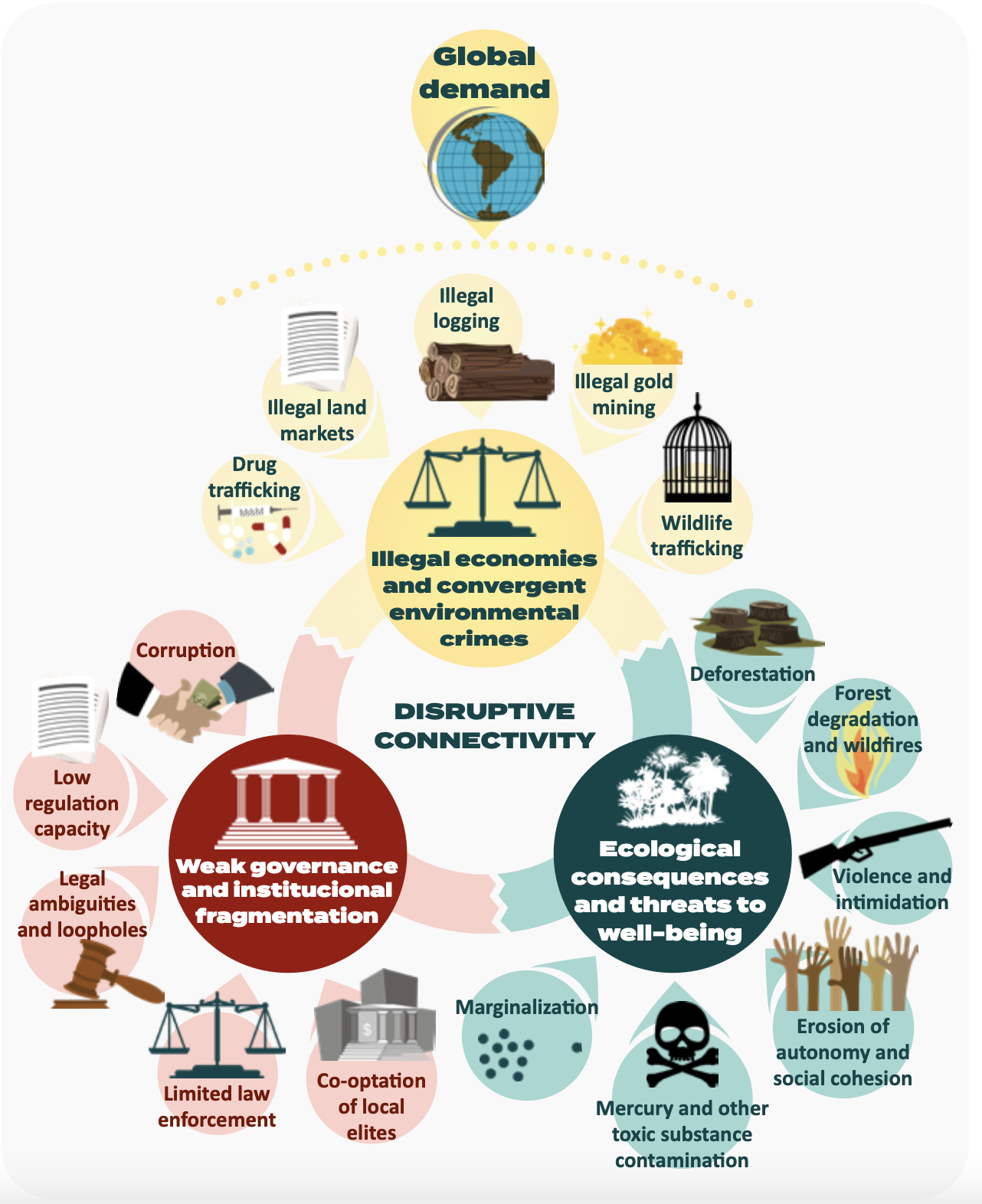
Illegal economies in the Amazon Basin—including land grabbing, illicit deforestation, illegal gold mining and logging, drug trafficking, and wildlife trafficking —pose an escalating threat to the region’s ecological integrity, human well-being, and formal economic systems. They are not isolated crimes; they form an interconnected system that fragments forests, displaces Indigenous Peoples and Local Communities, and undermines the Amazon’s role in regulating climate and supporting biodiversity. Driven by global demand, weak governance, and entrenched corruption, illicit networks reconfigure land use, concentrate power in criminal hands, and sever critical connections between ecosystems and cultures. At the same time, interest groups within state institutions and local governance structures influence legislation, capture regulation, and legalize irregular and illegal practices, further deepening environmental degradation. The convergence of these illegal economies has negative environmental impacts that jeopardize the food security of millions, undermining agricultural systems and depleting wild food sources. Indigenous Peoples and Local Communities—key stewards of Amazonian connectivity—face aggressions, gender-based violence, displacement, and the erosion of territorial and cultural autonomy. Public health is also threatened by mercury contamination, pollution from drug production, wildfire smoke, and the spread of vector-borne diseases in degraded landscapes. The economic consequences are both complex and far- reaching. Illicit activities erode public revenues through tax evasion and the circumvention of financial systems, while also imposing significant economic, social, and environmental costs. This vicious cycle undermines long-term development, weakens institutions, and intensifies pressures on already vulnerable ecosystems and communities. This chapter argues that illegal economies must be understood as systemic drivers of fragmentation and instability. Addressing them requires coordinated, cross-border strategies that integrate socio-ecological connectivity into governance, protect Indigenous Peoples and Local Communities’ autonomy, and ensure their safety. Regional cooperation is essential to confront transnational environmental crimes, while regenerative and inclusive high-integrity socio-bioeconomy initiatives can offer sustainable alternatives. Stronger state capacity, transparency, and local partnerships are critical, and global trade must align with Amazon protection through traceability, due diligence, and closing environmental money laundering loopholes.
Interconnections between global demand, illegal economies, weak governance, and ecological consequences. It highlights how these dynamics reinforce each other through disruptive connectivity, undermining environmental integrity and human well-being.
Sandra de Souza Hacon (Lead
Author) Fundação Oswaldo Cruz, Escola Nacional de Saúde Pública Sérgio Arouca, Rio de Janeiro, RJ, Brazil, sandra Hacon@fiocruz.br
Bruno Moreira de Carvalho Fundação Oswaldo Cruz, Instituto Oswaldo Cruz, Rio de Janeiro, RJ, Brazil bruno.carvalho@ioc.fiocruz.br
Abstract
The Amazon has been experiencing a convergence of ecological, climatic, and sociopolitical pressures that threaten ecosystem integrity, provision of ecosystem services, and human health. This chapter highlights how deforestation, forest fragmentation, wildfires, habitat loss, ecosystem degradation, and climate change are accelerating the risks of emerging infectious diseases, especially vector-borne and zoonotic threats, heat- related illness, air pollution from fires, nutritional insecurity, and overall mortality impacts. It also examines how structural weaknesses in public health systems (underfunding, geographic inaccessibility, and cultural exclusion) exacerbate vulnerabilities across the Amazon’s diverse populations, especially Indigenous Peoples (IPs) and Local Communities (LCs). The COVID-19 pandemic, recent arboviral outbreaks, and persistent health inequities underscore the urgent need for integrated, equitable responses.
Taking a One Health perspective, the chapter proposes a comprehensive approach that positions ecosystem conservation as a public health intervention. Key recommendations include halting deforestation, forest fires, and degradation, embedding health indicators into land-use and climate planning, and establishing regional One Health platforms. The chapter also emphasizes the need to strengthen primary health care, promote intercultural models that respect IPs’ and LCs’ knowledge, and enhance community surveillance and regional cooperation. By linking environmental governance with health equity, the Amazon can become a model for planetary health resilience. Achieving this vision requires decisive political leadership, sustained public investment, and a shift toward a socio-bioeconomy rooted in forest stewardship, social justice, and scientific collaboration.
Keywords
One Health, infectious diseases, spillover, deforestation, climate change
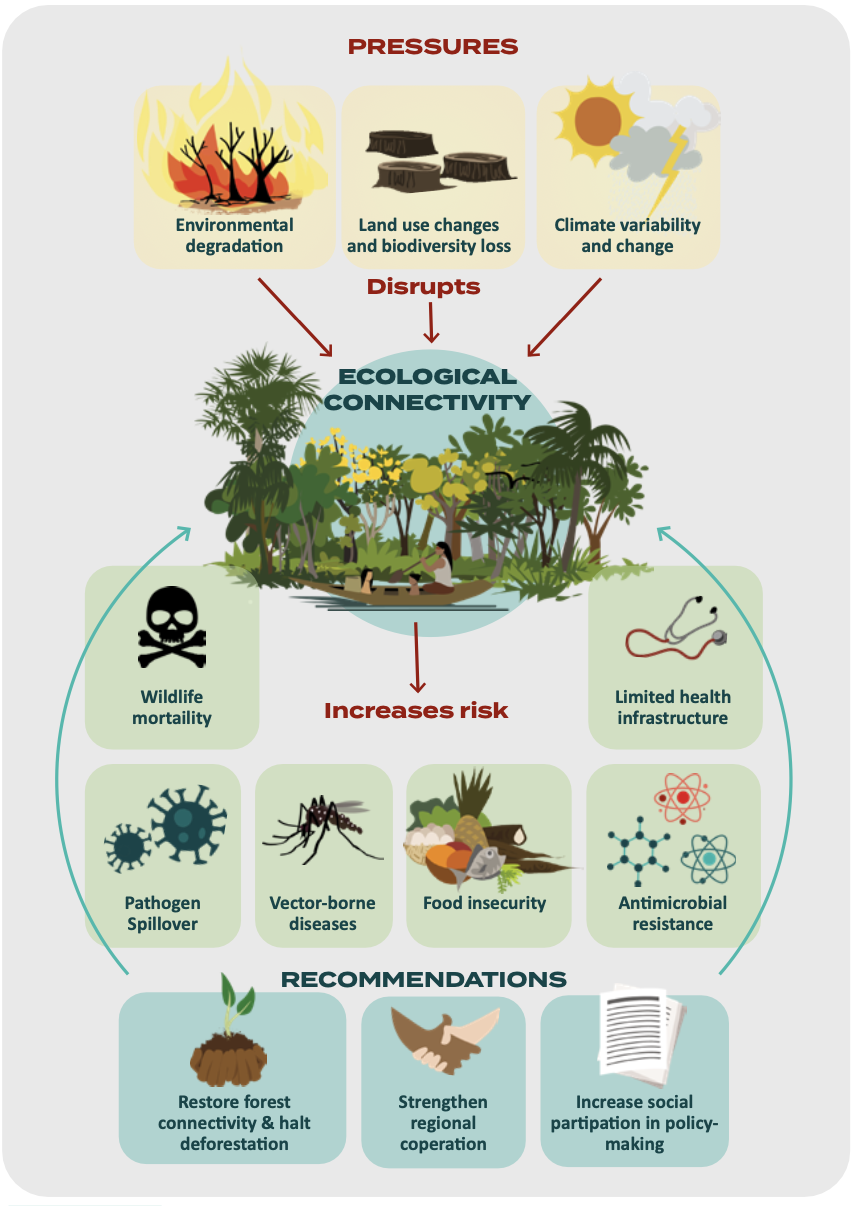
Graphical Abstract.
Ecological connectivity is disrupted by different pressures, increasing the threats of diseases emerging from this disruption. The One Health framework is needed to tackle these issues.
The Amazon Basin spans eight countries and one overseas territory, encompassing over 100 subnational political units, each with unique historical trajectories, cultural heritage, and ecological characteristics. This chapter examines the ecological, hydrological, and socio-cultural dimensions of connectivity, providing a framework for evaluating the environmental health and resilience of the region and its inhabitants, while evidencing key measures for improvement. Conservation approaches that recognize all three dimensions are essential. For example, Protected Areas (PAs) remain a key conservation approach, yet their effectiveness depends on integration with surrounding landscapes. Here, we focus on transboundary conservation, which requires cooperation across national and international boundaries, including the sharing of information, communication, consultation, coordinated action, and joint decision implementation. Transboundary governance is essential for managing shared resources such as water bodies and protected area corridors in this complex context of competing goals and multi-scale interactions. Despite complex challenges, transboundary conservation offers a path to address unsustainable practices, strengthen ecological resilience, and support vulnerable communities. Its success, however, depends on inclusive approaches that consider Indigenous and local monitoring, as well as equitable data sharing. However, governance capacity in the Amazon region, as well as efforts towards concerted territorial planning and coordinated data systems, remain insufficient. As stated in the Belém Declaration, transboundary governance in the Amazon must consider both Indigenous Peoples (IPs) and Local Communities (LCs) and institutional environmental governance. Transboundary conservation presents numerous opportunities for cross-border governance and regional cooperation, empowering IPs and LCs, improving socioenvironmental conditions, and promoting science-based conservation and monitoring. Transboundary conservation is more necessary than ever, requiring joint governance grounded in respect for national sovereignty and guided by an integrated vision that connects PAs, Indigenous Territories, and productive landscapes, ensuring the functional continuity of this vital ecosystem for the planet.
Keywords
Drivers of change, transboundary conservation, environmental connectivity, regional governance, monitoring.
Graphical Abstract.
Transformations of the ecological, hydrological and sociocultural connectivity of the Amazon with the elements that disrupt, maintain or restore the various dimensions of connectivity. (1) A connected, healthy landscape that supports nature and people; (2) Weakening of connectivity by a diversity of drivers; (3) A degraded landscape emerges, marked by fires and deforestation; (4) Transboundary conservation and restoration help reestablishing connectivity, though full reconnection remains incomplete.
José Gregorio Díaz Mirabal Wakuenai – Kurripaco People, Atabapo, Venezuela Regional Organization of Indigenous Peoples of Amazonas, Puerto Ayacucho, Venezuela
Coordinator of Indigenous Organizations of the Amazon Basin, Quito, Ecuador gmirabal66@gmail.com
Simone Athayde World Resources Institute, Washington, DC, United States simone.Athayde@wri.org
Luciana Villa Nova Silva Mangará.eco Inovação e Sustentabilidade Ltda., São Paulo, SP, Brasil luciana_villanova@hotmail.com
Abstract
This chapter approaches connectivity in the Amazon from the perspectives of Indigenous Peoples (IPs), Afrodescendant Peoples (APs), and Local Communities (LCs). It highlights the profound interconnection between their ways of life, their knowledge systems, and their ties to the territory. The adopted methodology is a reflective exercise that places the voices of various IPs, APs, and LCs at the center, in dialogue with scientific and academic knowledge. Territoriality is presented as a fundamental pillar that interconnects peoples and communities with their territories in physical, spiritual, sociocultural, symbolic, and political ways. The notion of connectivity is proposed, in an exploratory manner,
as a vital principle and a comprehensive way of life, transmitted ancestrally through oral codes, collective memory, and interactions with the territories and biocultural diversity of the Amazon. In broader terms, the process of co-producing knowledge articulates three main axes for reflecting on connectivity: 1) diverse interpretations and approaches to the concept of connectivity;
2) identification of risks and threats that endanger these vital connections; 3) emphasis on solutions promoted by the peoples and communities themselves from their territories.
Keywords
Territories, Spirituality, Indigenous Peoples, Afrodescendant Peoples, Local Communities
Graphical Abstract.
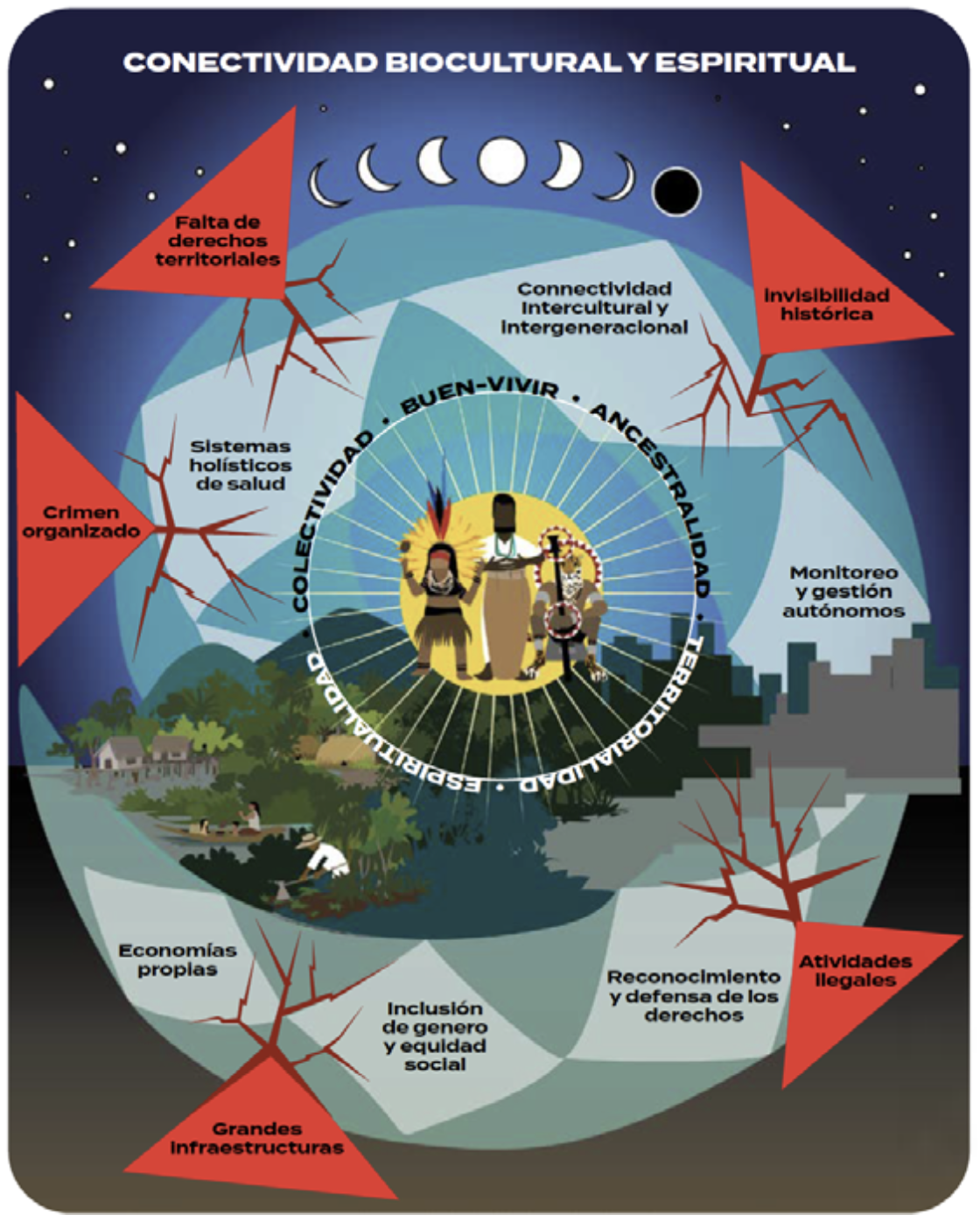
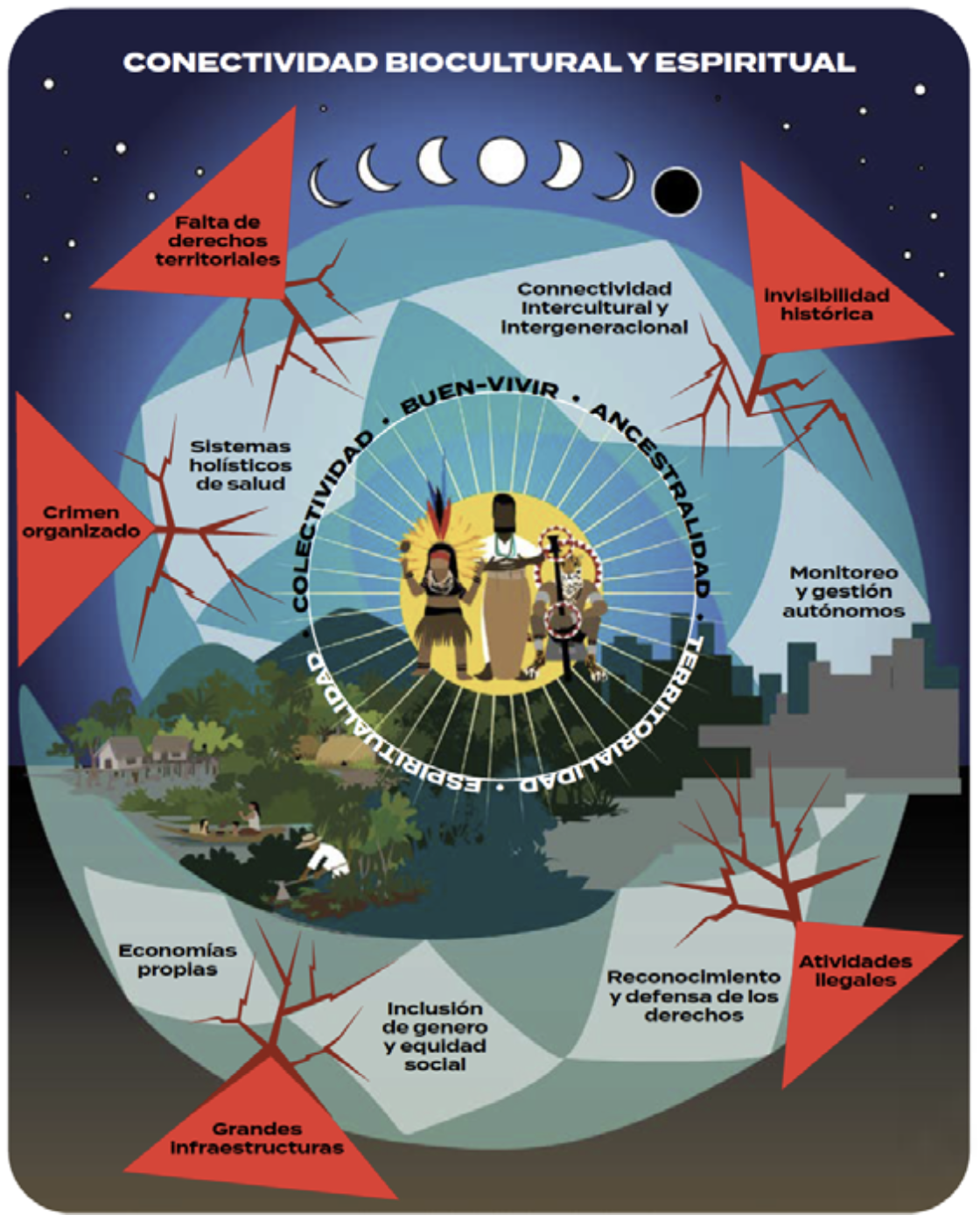
The image shows connectivity in the Amazon (in blue), the threats that affect it (in red), and opportunities to strengthen reciprocity with Mother Earth (in green). The central spiral symbolizes movement, transformation, and ancestral memory, and its core represents the territories of Indigenous Peoples (IPs), Afrodescendant Peoples (APs), and Local Communities (LCs).
Joice Ferreira Embrapa Amazonia Oriental, Empresa Brasileira de Pesquisa Agropecuária, Belém, Brazil joice.ferreira@embrapa.br
Eduardo S. Brondizio (Lead
Author) Department of Anthropology, Indiana University, Bloo- mington, IN, United States ebrondiz@iu.edu
Abstract
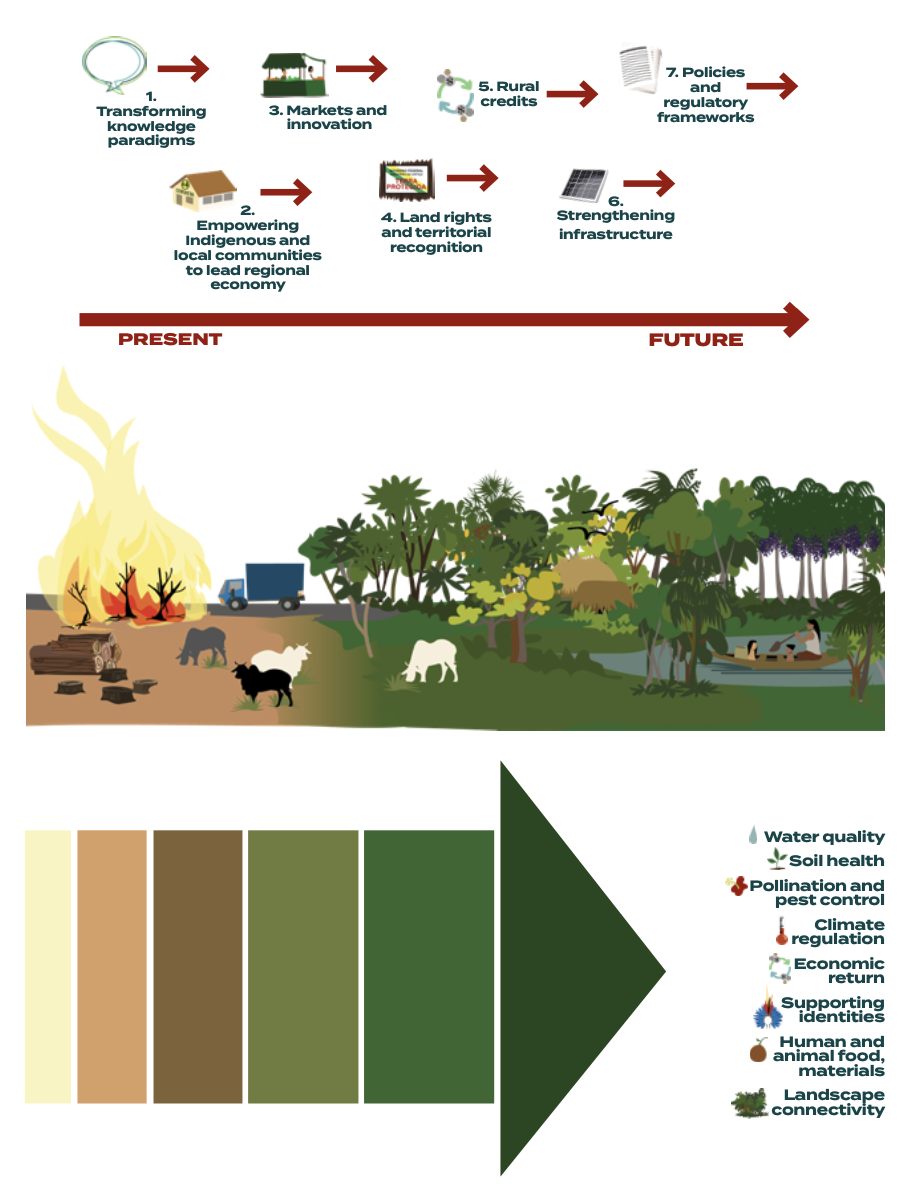
Multifunctional production systems have long been managed by Indigenous Peoples (IPs) and Local Communities (LCs) in the Amazon. These systems supply food along with other essentials for a good quality of life—such as medicines, artisanal and construction materials—while sustaining biodiversity, ecosystem functions, cultural heritage, and local economies. In contrast, dominant development models have promoted extensive monocultures and pastures, which now occupy the majority of deforested areas in the region. Despite these changes, multifunctional production systems persist over time, evolve, and form the backbone of Amazonian economies that are based on socio- biodiversity Yet, they face converging threats: statistical invisibility, erosion of Indigenous and local knowledge, economic fragility, declining productivity, weak infrastructure, labor constraints, and escalating climate risks. This chapter addresses the current configuration of production systems in the Amazon and their major social, economic, and environmental implications, while considering their contributions to landscape connectivity. It shows how multifunctional production systems offer viable pathways for restoring degraded areas and adopting more ecologically resilient, climatically adaptive, economically viable, inclusive, and sustainable Amazonian land uses. This chapter also highlights the socioeconomic and environmental trade-offs inherent in different land-use configurations, showing that multifunctional systems can enhance ecological integrity while generating employment, supplying products, and supporting cultural heritage. We present pathways and mechanisms that can support complex multifunctional landscapes. These include transforming knowledge construction paradigms, financing systems, and land tenure and also repurposing existing credit mechanisms. Our approach also involves empowering communities to lead commercial ventures and to develop value-added supply chains, and reframing public policies and public opinion in support of multifunctional production systems. Continuing to recognize and strengthen multifunctional production systems developed by Indigenous and rural communities is vital for shaping a future Amazon that is socially just, socially and ecologically connected, adaptive, and economically viable.
Marianne Schmink Center for Latin American Studies, University of Florida, Gainesville, FL, United States schmink@ufl.edu
Abstract
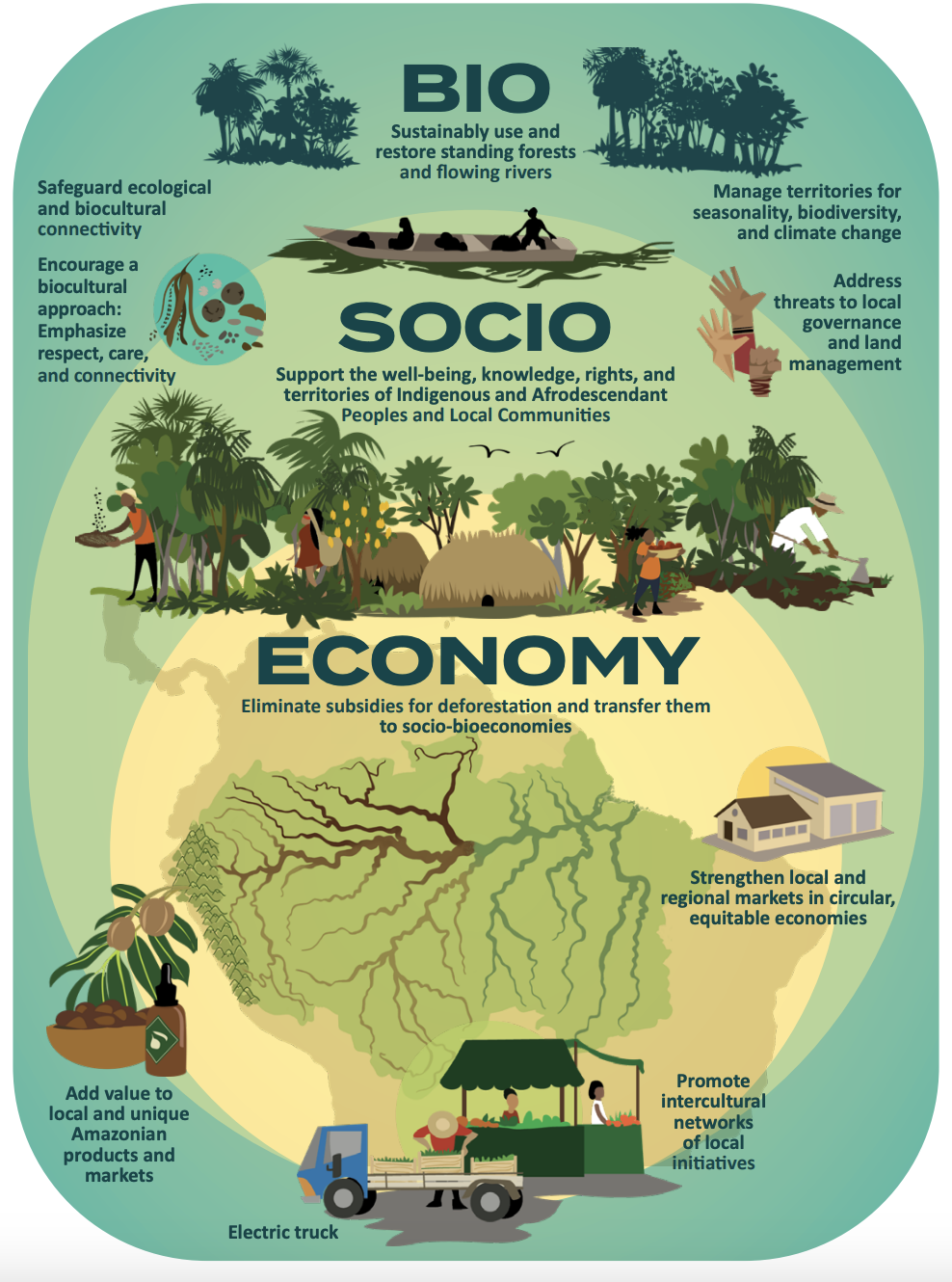
This chapter focuses on the deep interdependence between Amazonian peoples and their environments. This interdependence forms the foundation of socio-bioeconomies—systems of production, exchange, and consumption that contribute to a well-connected Amazon through the sustainable use and restoration of thriving standing forests and flowing rivers, benefiting both local communities and the planet as a whole. Diverse Amazonian communities share an intricate, place-based connection to their territories and the natural resources that sustain their livelihoods and that hold the potential of yielding commercial products with added value. Valuing territorial-based knowledge systems supports the rights and territories of IPs, APs, and LCs that are exercised through local governance and resource management systems. These elements help promote well-being and equitable benefit sharing, shifting away from profit maximization as the primary economic driver and toward sustaining ecosystem integrity and the intricate web of forest and riverine life. The chapter’s first subtheme explores the principles of self-defined local economies, which are rooted in cultural and social knowledge systems that promote well-being and justice. Local socio-bioeconomies include diverse initiatives by Indigenous and Afrodescendant Peoples, smallholder local communities, and urban dwellers. The second subtheme focuses on well- being beyond the human realm, emphasizing the sustainable management of natural systems. It highlights ecological practices that sustain biodiversity and respect biological life cycles and seasonal rhythms. The third subtheme addresses how to overcome key challenges and mitigate risks without crossing essential ecological thresholds. It presents concrete strategies for advancing territory-based socio-bioeconomies that sustain and improve local livelihoods, encourage market creativity and diversification, and protect the integrity of forests and rivers under the stewardship of diverse local communities.
Keywords
Socio-bioeconomy, Indigenous and local knowledge, biocultural approach, territory, value chains
Graphical Abstract.
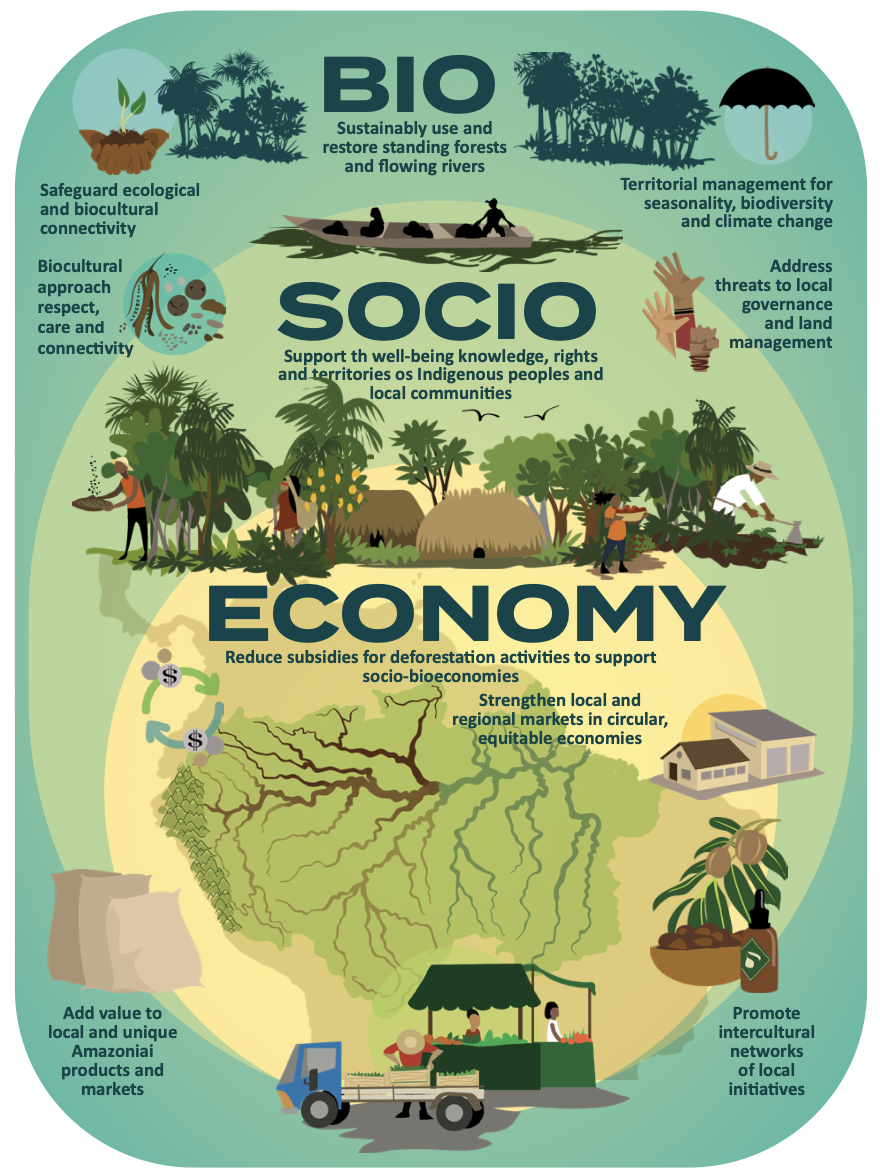
Subsidies supporting deforestation must be replaced by support for socio-bioeconomies that are intrinsically connected to the biodiverse forests and rivers of the region, supporting local people’s rights and managing territories and resources sustainably.
Adalberto L. Val Coordenação de Biodiversidade, Laboratório de Ecofisiologia e Evolução Molecular, Instituto Nacional de Pesquisas da Amazônia (INPA), Manaus, AM, Brazil dalval.inpa@gmail.com
Marina Hirota Departamento de Física, Universidade Federal de Santa Catarina, Florianópolis, SC, Brazil, and Relva Institute, Rio de Janeiro, Brazil marinahirota@gmail.com
Andrea C. Encalada Instituto BIOSFERA, Laboratorio de Ecología Aquática, Universidad San Francisco de Quito, Quito, Ecuador aencalada@usfq.edu.ec
Abstract
This chapter explores the connectivity of science and technology in the Amazon Basin, with particular emphasis on the integration of Indigenous and Local sciences (ILS) and Western academic sciences (WAS). It argues that fostering knowledge connectivity—i.e., links and feedbacks between worldviews, epistemologies, methodologies, technologies, and institutions—is essential to addressing the region’s socio-environmental challenges and catalyzing a transition toward a resilient and sustainable future. The chapter reveals structural asymmetries in knowledge systems, including the underrepresentation of Indigenous Peoples’ and Local Communities’ contributions, fragmentation across national efforts, and the limited visibility of locally produced research. It emphasizes the need to transform how knowledge is produced, valued, and funded in the Amazon, integrating Indigenous epistemologies and methodologies and their academic counterparts, securing equitable benefit sharing, and reinforcing territorial rights through participatory and transdisciplinary research. Furthermore, it discusses the potential for connecting ILS with emerging technologies to enhance biodiversity monitoring, detect environmental degradation, and support evidence-based policymaking, including satellite imagery, environmental DNA (e-DNA), and artificial intelligence (AI). The chapter advocates for capacity building, digital infrastructure, and data governance aligned with the FAIR (findable, accessible, interoperable, reusable) and CARE (collective benefit, authority to control, responsibility, ethics) principles to ensure ethical and effective knowledge use and equitable benefit sharing. Finally, the chapter proposes criteria for evaluating Amazonian science through a contextual lens, including the participation of Indigenous and Local Communities’ scientists, transdisciplinarity, technology transfer, and societal relevance. By centering plural knowledge systems and equity, the Amazon can become a global model of knowledge-led sustainable development.
Keywords
The Amazon, Indigenous and Local sciences, Science, technology and innovation policy, knowledge dialogues, socio-bioeconomy.
Graphical Abstract.
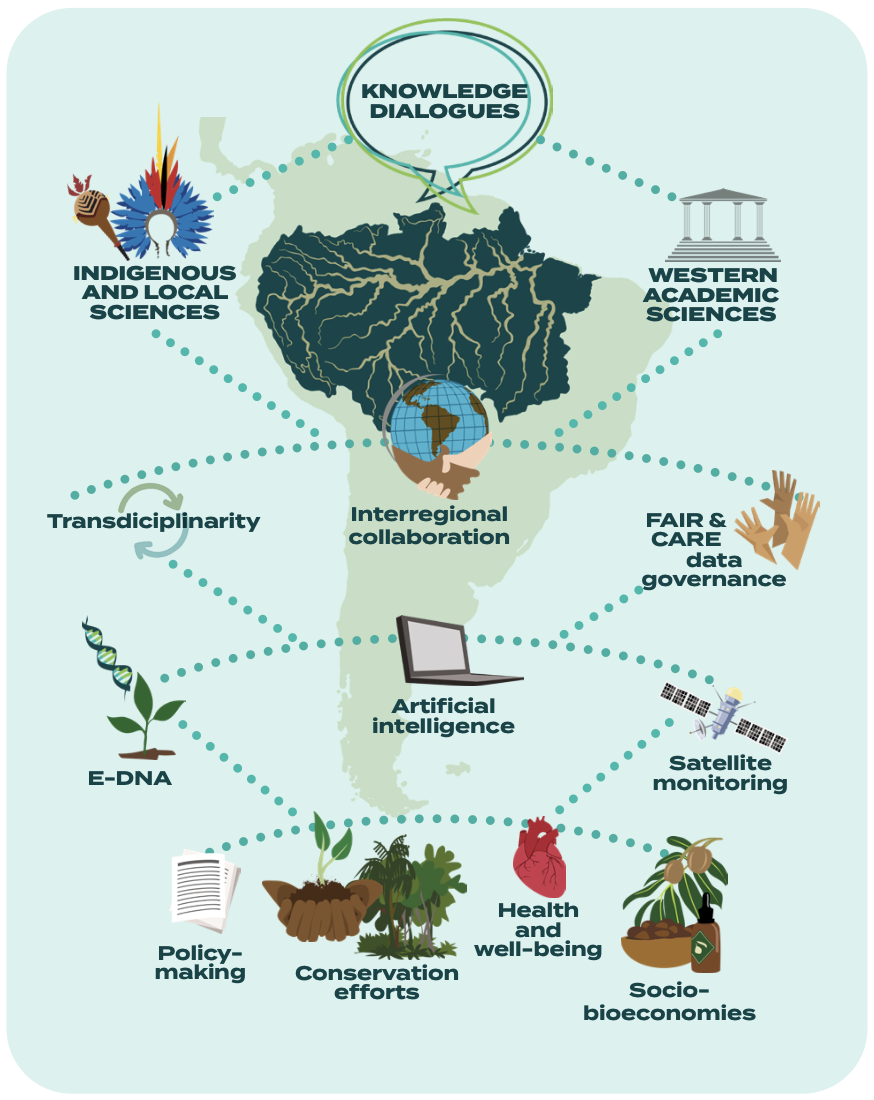
Network of knowledge in the Pan-Amazon that integrates academic sciences and Indigenous and Local sciences and applies key strategies — transdisciplinarity, data governance, interregional collaboration — and emerging technologies such as e-DNA, satellite monitoring, artificial intelligence to guide conservation and sustainable development.
Dolors Armenteras
Departamento de Biología, Universidad Nacional de
Colombia, Bogotá, Colombia; Instituto de Ciencias Forestales, Instituto Nacional de
Investigación y Tecnología Agraria y Alimentaria, Consejo Superior de Investigaciones
Científicas, Madrid, Spain darmenterasp@unal.edu.co
Camila C. Ribas Coordenação de Biodiversidade, Instituto Nacional de Pesquisas da
Amazônia, Manaus, Brazil camilaribas@gmail.com
The Overview
The Amazon is a complex and interdependent mosaic of ecosystems that supports billions of lives. Deforestation has caused the loss of around 18% of the Amazon region, and 38% of the remaining forest is degraded, disrupting ecological and socio-cultural connectivity, accelerating carbon emissions, exacerbating water and food insecurity, causing economic instability, and weakening climate resilience. The system may be approaching a tipping point, with models indicating that ecosystem transitions could affect as much as 47% of forest area by 2050.
Renata Libonati
Department of Meteorology, Federal University of Rio de Janeiro, Institute of Geoscience, Rio de Janeiro, Brazil & University of Lisbon, Centro de Estudos Florestais and Instituto Dom Luiz, Lisboa, Portugal renata.libonati@igeo.ufrj.br
Bibiana A. Bilbao Simón Bolivar University, Environmental Studies Department, Caracas, Venezuela &
Université Paul Valéry Montpellier, Montpellier, France bbilbao@usb.ve
The Overview
Extreme wildfires in the Amazon forest, intensified by climate change and extreme weather events (droughts and heatwaves), are driven by deforestation, agriculture, mining, and forest degradation from logging and edge effects, threatening biodiversity and local communities while emitting smoke and greenhouse gases (GHGs). Once rare in humid forests, extreme wildfires now risk pushing ecosystems toward irreversible tipping points, disrupting natural cycles, public health, the livelihoods of IPs and LCs, and exacerbating climate change. The loss of lands of Indigenous Peoples and Local Communities (IPs and LCs) and erosion of their patch-based traditional fire practices—which historically helped control fire spread and maintain landscape connectivity—also contribute to the climate crisis. Current Amazon zero-fire policies centered on suppression are often ineffective, costly, and dismissive of IPs’ and LCs’ fire practices.
Paola A. Arias Grupo GIGA, Escuela Ambiental, Facultad de Ingeniería,
Universidad de Antioquia, Medellín, Colombia paola.arias@udea.edu.co
The Overview
The Amazon’s hydrological cycle is an interconnected and complex system encompassing the largest river system on Earth and multiple social and ecological interactions. River surface waters connect along drainage networks and between rivers and adjacent floodplains. The land is connected to far-distant regions through atmospheric processes (so-called “aerial rivers”). Yet these different ecological and socio-cultural dimensions of connectivity have been threatened by various pressures, from dams that disrupt drainage networks to climate changes that isolate areas such as riverine communities. Because of these factors, we urgently need to conserve free-flowing rivers and restore interrupted rivers to re-establish connectivity along Amazon watercourses.
Climate finance is essential to harnessing the Amazon’s many environmental services to benefit climate and communities, offering a means to combat deforestation, scale restoration, and promote conservation through models such as the socio-bioeconomy. Private, public, and multilateral actors mobilize capital through grants, credit, equity, blended finance, payments for ecosystem services (PES), results-based mechanisms, debt restructuring, carbon credits, and risk-sharing instruments. Although climate-dedicated finance has grown, current flows remain insufficient relative to the scale of adaptation and mitigation challenges1 . There is an urgent need to scale up climate finance to unlock the full potential of the Amazon in advancing the global climate agenda to match the region’s ecological importance and socio- economic complexity—while at the same time, financial mechanisms should address the needs and rights of local populations.
Gabriel Cardoso Carrero.
Science Team, Revalue Nature Ltd, London, United Kingdom & Institute for Conservation and Sustainable Development of the Amazon (IDESAM), Manaus, Brazil gabriel.carrero@revalue.earth
The Overview
Illegal land markets in Amazonian countries are a substantial driver of territorial fragmentation, with far-reaching impacts that extend beyond forest loss. This fragmentation destabilizes ecological systems and severely weakens institutional, legal, and socio-political structures, facilitating persistent governance fragmentation, legal ambiguities, and power vacuums. Illegal land appropriation thrives in these environments, where regulatory disconnects across municipal, state, and national levels undermine cohesive territorial governance. Addressing this structural fragmentation requires an integrated, systemic approach targeting root causes rather than isolated enforcement actions.
Address the Socio-Environmental Harms of Illicit Drug Activities
Author
Juan C. Garzón Vergara
Vergara. Igarapé Institute, Rio de Janeiro, RJ, Brazil jcg78@georgetown.edu
Héctor F. Santos Global Partnership on Drug Policies and Development (GPDPD), Deutsche Gesellschaft für Internationale Zusammenarbeit (GIZ), Berlin, Germany hector.santos@giz.de
The Overview
Across key territories of the Amazon, illicit drug production and trafficking fuel environmental degradation and territorial conflict. These harms are driven by an expanding global illicit drug market and reinforced by illicit financial flows and overlapping legal and illegal economies, deepening ecological and social pressures. Environmental crime policy responses often replicate punitive drug control approaches, focusing on symptoms over root causes and hindering integrated, preventive, and rights-based strategies. Yet current responses continue to overlook these dynamics. This Call to Action urges a rethinking of drug policy through an environmental lens—enhancing enforcement to protect ecosystems and communities, disrupting illicit finance, integrating environmental safeguards, advancing sustainable transitions, and upholding the rights and roles of Indigenous Peoples and Local Communities.
Luis E. Fernandez
Centro de Innovación Científica Amazónica (CINCIA) & Sabin
Center for Environment and Sustainability, Wake Forest University,
Winston-Salem, NC, USA fernanle@wfu.edu
The Overview
Across all of the Amazon – including eight countries and an overseas territory of France, illegal artisanal and small-scale gold mining (ASGM) is accelerating deforestation, disrupting hydrological systems, and mobilizing toxic mercury—while financing criminal networks that erode state authority, often in Indigenous territories. These measurable, cross-border impacts now outpace conventional monitoring and enforcement, undermining climate and biodiversity goals, public health, and governance across the Basin.
This Call to Action is intended to provide a concise overview of the scale, drivers, and impacts of illicit gold extraction across the Amazon. It highlights key facts and trends, presents illustrative tools and approaches, and points to opportunities for coordinated action to dismantle illegal supply chains, reduce deforestation and biodiversity loss, curb mercury pollution, and strengthen the rights, health, and territorial security of Indigenous communities.
Across the Amazon, socio-environmental defenders are on the front lines protecting their territories and communities. Confronting illegal logging, mining, land grabbing, and drug trafficking, as well as policies that enable dispossession, they face escalating violence, criminalization, and aggressors acting with impunity. In 2022, one in five killings of environmental defenders occurred in the Amazon, making it a high-risk region for those defending nature. These crimes follow systematic, organized patterns that weaken communities, threaten Indigenous people survival, and facilitate resource exploitation. The commitments made in the Belém Declaration of the Amazon Cooperation Treaty Organization (ACTO) and the standards set by the Escazú Agreement (i.e., the Regional Agreement on Access to Information, Public Participation and Justice in Environmental Matters in Latin America and the Caribbean) must be fully implemented to guarantee defenders’ rights. Protecting defenders is not only a duty but a prerequisite for preserving the Amazon’s socio-ecological connectivity.
Ana Filipa Palmeirim Palmeirim. Instituto de Ciências Biológicas, Universidade Federal do Pará,
Guamá, PA, Brazil filipapalmeirim@ufpa.br
The Overview
Deforestation and fires in the Amazon continue to endanger countless species and jeopardize vital ecosystem services, including those essential to human health. Forest fires, for example, produce a toxic haze that can lead to respiratory and cardiovascular diseases and infections in humans; mining can increase mercury concentration in watersheds, with toxic effects on skin and the cardiovascular, pulmonary, urinary, and gastrointestinal systems1,2. When it impairs forest integrity, land-use change ends up favoring species that can adapt to anthropic habitats and can also act as disease hosts and vectors3. As a consequence, the abundance of those species rises, increasing zoonotic and vector-borne disease transmission risks. In addition, the creation of forest edges due to forest fragmentation also increases the likelihood of contacts between people and animals at the interface, further boosting the risk of zoonotic disease transmission. Therefore, the conservation and restoration of forests is key in preventing diseases and safeguarding human health.
Francisco Chiaravalloti-Neto School of Public Health, University of São Paulo,
São Paulo, SP, Brazil franciscochiara@usp.br
The Overview
Central and South America are recognized as hot spots for emerging and re-emerging vector-borne and zoonotic diseases. The region has seen frequent outbreaks of infectious diseases, some of which—like Zika and chikungunya—have escalated into major public health concerns. More recently, the Oropouche and Mayaro viruses have drawn increasing attention. These pathogens can evolve, gain resistance, and spark new outbreaks. Climate change and extreme weather further exacerbate risks by disrupting ecosystems and altering vector dynamics. Additionally, deforestation increases the likelihood of spillover events and enables viruses to invade rural and urban areas, by destroying the natural environments of both vectors and reservoirs. Effective control of arboviral diseases relies on coordination, data integration, strong health systems, and rapid action in high-risk environments.
Mariana M. Vale
Federal University of Rio de Janeiro, Department of Ecology, Centro de Ciências
da Saúde, Rio de Janeiro, RJ, Brazil mvale.eco@gmail.com
Neil M. Vora Conservation International, Arlington, VA, United States nvora@conservation.org
Thaísa de S. Araújo Federal University of Rio de Janeiro, Graduate Program in Ecology,
Centro de Ciências da Saúde, Rio de Janeiro, RJ, Brazil thaisa.souza802@gmail.com
Bruno M. de Carvalho Fundação Oswaldo Cruz, Instituto Oswaldo Cruz, Rio de Janeiro, RJ, Brazil bruno.carvalho@ioc.fiocruz.br
The Overview
About 75% of emerging infectious diseases (EIDs)—new infectious diseases or those that are increasing in incidence—are caused by pathogens that “spill over” from animals into people (zoonotic pathogens). EID events have risen since the 1940s and are projected to increase several-fold in the coming decades. Environmental degradation is a major driver of EIDs. Key pathways for spillover include deforestation, wildlife hunting and trade, and intensive livestock farming near natural areas. Preventing pandemics requires tackling these risks, especially in the Amazon’s deforestation frontiers.
Strengthen Wildlife Health Surveillance Systems for Early Warnings and Disease Prevention
Lead Authors
Paulo Colchao-Claux,
Wildlife Conservation Society, Lima, Peru pcolchao@wcs.org
Jorge Luis Martinez Wildlife Conservation Society, Lima, Peru jlmartinez@wcs.org
Kiara Acurio Wildlife Conservation Society, Lima, Peru kacurio@wcs.org
Rosa Vento Wildlife Conservation Society, Lima, Peru rvento@wcs.org
Mariana Montoya Wildlife Conservation Society, Lima, Peru mmontoya@wcs.org
The Overview
Land-use change, inadequate infrastructure, wildlife traffic, and climate change degrade ecosystems in the Amazon and promote contact between people and wildlife, fostering disease outbreaks and exposure to pollutants that affect public health, food security, biodiversity, and the economy. Wildlife health surveillance provides early warning of diseases to enable prevention, and protection of human and animal health, but its implementation remains limited due to lack of information, collaboration, and resources.
The Amazon Basin faces growing cross-border environmental threats, including deforestation, wildfires, habitat fragmentation, pollution, and climate change. Countries use distinct monitoring systems that vary in scope, methods, and definitions, making regional data hard to compare. Water, soil, and biodiversity monitoring remain limited. Though regional tools exist, they are underused by governments. This fragmentation weakens early warning systems and regional action. Currently, shared governance mechanisms that link national and local monitoring efforts under a common regional vision are lacking. A coordinated, transboundary monitoring approach is urgently needed to improve transparency, policy- making, and conservation efforts.
Plan Infrastructure Development Through Integrated Regional Strategies
Lead Authors
Rafael Soria
Institute for Energy and Materials, Universidad San Francisco de Quito,
Quito, Ecuador rsoriap@usfq.edu.ec
Roosevelt García-Villacorta Centro Peruano para la Biodiversidad y Desarrollo Sostenible
Iquitos, Perú roosevelt.garcia@gmail.com
The Overview
Major infrastructure projects in the Amazon, such as hydroelectric dams and roads, have led to extensive deforestation, ecosystem degradation, the establishment of illegal economies, and the disruption of forest and river connectivity. Currently, most infrastructure projects are developed in isolation by individual countries, with little consideration for their socio- economic and environmental impacts on neighboring sub-basins or the Amazon as a whole. To address these impacts, Amazon Basin governments must engage in coordinated, cross- border dialogues and action focused on the sustainable planning and development of infrastructure, considering nature-based solutions, regional assessment of projects, advanced technology, and Indigenous and Local Knowledge (see Chapter 4). This is essential to account for cumulative and transboundary negative impacts, and ensure the long-term conservation 2 Figure C4.14.1. Unpaved stretch of BR 319, between Humaitá and Realidade, in southern Amazonas, Brazil. Photo credit: Alberto César Araújo/Amazônia Real. of the Amazon. Key priorities include: (i) an integral evaluation of the potential sources of green energy projects (solar, wind, hydro, geothermal) with the least negative impact and the highest energy output; (ii) computationally-informed strategic hydropower planning for lower-impact, and smart location of small hydroelectric facilities - considering that the definition of “small” dams varies significantly across countries, though a capacity of up to 10 MW is increasingly recognized as the international standard1 ; (iii) the management of legal and responsible mining issues; (iv) the mitigation of environmental impacts of the hydrocarbon industry; and (v) alternatives to road expansion.
João P. Braga
Institute for Sustainable Resources, University College London,
London, United Kingdom joao.pedrol.23@ucl.ac.uk
Sandra Belaunde School of GeoSciences, University of Edinburgh, Edinburgh,
United Kingdom sandra.belaunde@unsdsn.org
The Overview
The Amazon region is facing unprecedented threats from deforestation and degradation, bringing the biome closer to a system-level tipping point. To avoid this, numerous small- scale restoration projects have been implemented. The map in this Call to Action shows the current state of Amazon conservation priorities and disturbance levels across the basin. However, the existing fragmented approaches to restoration cannot match the scale of the current threats to the biome’s integrity, and the Amazon still urgently requires coordinated large-scale and multi-country restoration initiatives. This Call to Action argues that, when it comes to restoration, a system-level approach to funding basin-wide restoration—coupled with deforestation control and greenhouse gas emissions reduction—is needed to prevent the Amazon from tipping into another vegetation state.
Dolors Armenteras
Departamento de Biología, Universidad Nacional de
Colombia, Bogotá, Colombia; Instituto de Ciencias Forestales, Instituto Nacional de
Investigación y Tecnología Agraria y Alimentaria, Consejo Superior de Investigaciones
Científicas, Madrid, Spain darmenterasp@unal.edu.co
Camila C. Ribas Coordenação de Biodiversidade, Instituto Nacional de Pesquisas da
Amazônia, Manaus, Brazil camilaribas@gmail.com
The Overview
The Amazon is a complex and interdependent mosaic of ecosystems that supports billions of lives. Deforestation has caused the loss of around 18% of the Amazon region, and 38% of the remaining forest is degraded, disrupting ecological and socio-cultural connectivity, accelerating carbon emissions, exacerbating water and food insecurity, causing economic instability, and weakening climate resilience. The system may be approaching a tipping point, with models indicating that ecosystem transitions could affect as much as 47% of forest area by 2050.
Establish Spiritual Connectivity to Conserve the Amazon
Lead Authors
José Gregorio Díaz Mirabal
Wakuenai People – Kurripaco, Atabapo, Venezuela
Regional Organization of Indigenous Peoples of Amazonas, Puerto Ayacucho, Venezuela
Coordinator of the Indigenous Organizations of the Amazon Basin, Quito, Ecuador gmirabal66@gmail.com
The Overview
There are diverse forms of spiritual connectivity among Indigenous Peoples (IPs), Afrodescendant Peoples (APs), and Local Communities (LCs), such as Buen Vivir1 and Ubuntu, which share a common foundation in relational ontology: all beings, human and non-human, are part of the Cycle of Life. In this sense, spirituality has structured collective knowledge systems that sustain social cohesion, ecological resilience, and territories with lower rates of deforestation in the Amazon; it is not simply an ornament or an aspect of culture, but a vital principle for collective well-being. Nevertheless, these forms remain largely invisible and insufficiently integrated into conservation policies, and they are not acknowledged as modes of environmental governance.
Dolors Armenteras
Departamento de Biología, Universidad Nacional de
Colombia, Bogotá, Colombia; Instituto de Ciencias Forestales, Instituto Nacional de
Investigación y Tecnología Agraria y Alimentaria, Consejo Superior de Investigaciones
Científicas, Madrid, Spain darmenterasp@unal.edu.co
Camila C. Ribas Coordenação de Biodiversidade, Instituto Nacional de Pesquisas da
Amazônia, Manaus, Brazil camilaribas@gmail.com
The Overview
The Amazon is a complex and interdependent mosaic of ecosystems that supports billions of lives. Deforestation has caused the loss of around 18% of the Amazon region, and 38% of the remaining forest is degraded, disrupting ecological and socio-cultural connectivity, accelerating carbon emissions, exacerbating water and food insecurity, causing economic instability, and weakening climate resilience. The system may be approaching a tipping point, with models indicating that ecosystem transitions could affect as much as 47% of forest area by 2050.
Dolors Armenteras
Departamento de Biología, Universidad Nacional de
Colombia, Bogotá, Colombia; Instituto de Ciencias Forestales, Instituto Nacional de
Investigación y Tecnología Agraria y Alimentaria, Consejo Superior de Investigaciones
Científicas, Madrid, Spain darmenterasp@unal.edu.co
Camila C. Ribas Coordenação de Biodiversidade, Instituto Nacional de Pesquisas da
Amazônia, Manaus, Brazil camilaribas@gmail.com
The Overview
The Amazon is a complex and interdependent mosaic of ecosystems that supports billions of lives. Deforestation has caused the loss of around 18% of the Amazon region, and 38% of the remaining forest is degraded, disrupting ecological and socio-cultural connectivity, accelerating carbon emissions, exacerbating water and food insecurity, causing economic instability, and weakening climate resilience. The system may be approaching a tipping point, with models indicating that ecosystem transitions could affect as much as 47% of forest area by 2050.
Expand Fishing Co-Management to Transform Knowledge and Governance Frameworks in Amazonian Production Systems
Lead Authors
João V. Campos-Silva
Instituto Juruá, Manaus, AM, Brazil jvpiedade@gmail.com
The Overview
Overexploitation in the Amazon threatens ecosystems, food security, and local livelihoods. The pirarucu (Arapaima gigas), or arapaima, which is the largest scaled freshwater fish on Earth, has declined sharply due to overharvesting. In Amazonas state, Brazil, community- based co-management demonstrates how sustainable fisheries can integrate biodiversity conservation with human well-being. Through fishing accords, Indigenous and riverine communities protect territories, restore fish stocks, and generate income. This Call to Action conveys how the pirarucu management model strengthens local governance and partnerships, reduces inequalities, and advances conservation, although infrastructure, logistics, and market challenges remain.
Empower local communities through multifunctional systems that address territorial conflicts and landscape fragmentation
Lead Authors
Paola J. Isaacs-Cubides
Instituto de Investigación de Recursos Biológicos Alexander von Humboldt, Bogotá, Colombia pisaacs@humboldt.org.co
The Overview
Deforestation and environmental degradation1 on the territories of Indigenous Peoples and Local Communities (IPs and LCs) result in forest loss, habitat fragmentation, biodiversity loss, and socio-territorial conflicts. IPs and LCs are threatened by illicit economies, water pollution, insecure land tenure, unsustainable land use practices and lack the conditions to sustain their traditional ways of life 2. Promoting sustainable value chains rooted in multifunctional systems strengthens IPs and LCs livelihoods while fostering the territorial empowerment of communities.
Expand the market access of family farmers’ cooperatives in the Amazon
Lead Authors
Hilder A. B. Farias
Faculdade de Ciências Econômicas, Universidade Federal do Pará (UFPA), Belém, Brazil;
Lancaster Environment Centre, Lancaster University, Lancaster, UK (Visiting Researcher, CNPq Scholarship).
hilder033@gmail.com
Anderson Borges Serra
Faculdade de Engenharia Florestal, Universidade Federal do Pará (UFPA), Belém, Brazil
serraok@ufpa.br
Harley Silva
Faculdade de Ciências Econômicas, Universidade Federal do Pará (UFPA), Belém, Brazil,
harley74@gmail.com
The Overview
Amazonian family farming is rooted in multifunctional production systems, closely related to the livelihood of family farmers and local communities, and is essential for food security, cultural diversity, and territorial resistance in the context of a pressuring socio-environmental frontier1. This group lacks what is required to leverage public policies to expand their opportunities to access supply chains, linking their establishments and cooperatives to stable institutional markets, as well as short food supply chains and empowering them in governance so that policy design reflects their needs and knowledge.
Support Biodiverse Fisheries That Underpin People’s and Nature’s Health
Lead Authors
Sebastian A. Heilpern
Department of Earth System Science, Stanford University, Stanford, CA, United States heilpern@stanford.edu
The Overview
Fisheries underlie food security and livelihoods for millions of people throughout the Amazon Basin, yet they are changing due to factors including overexploitation, habitat degradation, and climate change. Additional extractive activities, such as artisanal gold mining, are polluting waters, elevating mercury levels in fish and undermining the ability of fisheries to sustain human nutrition. At the same time, together with the rapid pace of urbanization, Amazonian food systems are shifting, with aquaculture expanding rapidly alongside other farmed animal-sourced foods like beef and poultry. Sustaining access to biodiverse and productive fisheries is key for Amazonian food security and sovereignty, ecosystem integrity, and reducing the overall environmental footprint of food systems.
Major industries have developed in recent decades around commodities from a wide range of species native to the Amazon. These commodities provide opportunities to promote regional enterprises and increase the scale of economic activity that depends on the Amazon’s standing forests and flowing rivers. Although the commercialization of native Amazonian species can support forest and river protection in Indigenous Territories, Afrodescendant lands, and Protected Areas, it also presents major challenges: the boom-and-bust dynamics of global markets, the difficulties of equitably distributing risks and rewards, and a lack of formal recognition of Indigenous Peoples’ (IPs’) and Local Communities’ (LCs’) rights and intellectual property. Amazonian products have also mostly been exported as commodities, with few value-added processes occurring at the local level. Weak regulation and poor coordination with local authorities have further undermined sustainable, traditional practices and increased the risk of overharvesting.
Biodiverse Fisheries Underpin People’s and Nature’s Health
Lead Authors
Sebastian A. Heilpern
Stanford University Department of Earth System Science, Stanford, CA, United States
heilpern@stanford.edu
The Overview
Fisheries underlie food security and livelihoods for millions of people throughout the Amazon Basin, yet they are changing due to factors including overexploitation, habitat degradation, and climate change. Additional extractive activities, such as artisanal gold mining, are polluting waters, elevating mercury levels in fish and undermining the ability of fisheries to sustain human nutrition. At the same time, together with the rapid pace of urbanization, Amazonian food systems are shifting, with aquaculture expanding rapidly, alongside other farmed animal-sourced foods like beef and poultry. Sustaining access to biodiverse and productive fisheries is key for Amazonian food security and sovereignty, ecosystem integrity, and reducing the overall environmental footprint of food systems.
Develop Marketable New Amazonian Socio-Biodiversity Products
Lead Authors
Ricardo de la Pava
Local Economies Research & Development, Fundación Gaia
Amazonas, Bogota, Colombia ricardodelapava@gmail.com
The Overview
Despite the Amazon’s tremendous biodiversity, few of its species are managed and sold on the market. Marketable new Amazonian socio-biodiversity products are scarce due to a lack of (1) trust, (2) clear biocultural protocols, and (3) botanical inventories that can facilitate sharing and identifying Indigenous and Local Knowledge (ILK) about biodiversity in order to open new market opportunities and allocate labor. Traditional products from Indigenous Peoples (IPs) and Local Communities (LCs) are not embedded in the market because they require rigorous local research and national and regional legal frameworks that enable a direct but fair relationship between ILK, and Western Academic Sciences and industrial development. This Call to Action explores opportunities to identify new Amazonian socio-biodiversity products and bring them to markets.
The rapid expansion and extractive growth of both traditional industries and non-timber forest products (NTFPs) have intensified. The surging global demand for açaí, for example, has transformed biodiverse floodplains into monocultures, reducing species diversity and compromising vital forest functions. Responsibly scaling socio-bioeconomies that respect thresholds and principles related to sustainability requires alternative scaling methods such as more diverse plant polycultures that are compatible with biodiversity and/or accomplish large-scale restoration. Furthermore, technologies and infrastructure are needed to support the biological and cultural initiatives that underpin the socio-bioeconomy, including translating Indigenous and Local Knowledge and forest logics into practical economic and design principles, such as product and material circularity, to guide scale-ups. This Call to Action outlines these principles and provides recommendations to guide responsible scaling to support the Amazon Basin’s long term conservation, including the wellbeing of its residents.
Share Benefits Equitably with Local Actors and Communities
Lead Authors
Germán I. Ochoa
Universidad Nacional de Colombia, Kilómetro 2, vía Tarapacá. Leticia, Colombia, 9100001 giochoaz@unal.edu.co
Diego Oliveira Brandão
Science Panel for the Amazon, South America Office, São José dos Campos, Brazil diegobrandao779@gmail.com
The Overview
The economy of the Amazon is dominated by agricultural commodities such as beef and soy, biodiversity-based products such as açaí and Brazil nut, and mineral products such as gold, all of which are produced and exported with low value added locally. These sectors often incorporate rural and urban local populations into global commodity chains often in an inequitable way. The current economic land use production model has produced the highest tropical deforestation and degradation rates in the world, with the Amazon region accounting for the majority of South America’s population living in poverty. Although Indigenous peoples have domesticated hundreds of native species and discovered substances, aromas, and flavors that are essential to the food, cosmetics, and pharmaceutical industries, they remain largely excluded from the fair distribution of benefits. Strengthening economic and social connections among local “urban” and “rural” stakeholders represents an opportunity (and challenge!) to reinforce local value chains and ensure fair and inclusive distribution of benefits.
Promote ethical, fair, sovereign, inclusive and locally-driven technology development
Lead Authors
Juan Sebastián Ulloa
Instituto de Investigación de Recursos Biológicos Alexander von Humboldt, Bogotá, Colombia
julloa@humboldt.org.co
Marina Hirota
Universidade Federal de Santa Catarina, Florianópolis, Brazil
Instituto Relva, Rio de Janeiro, RJ, Brazil
marinahirota@gmail.com
The Overview
In the Amazon, technology holds the power to either entrench inequality — deepening dependency, erasing Indigenous and Local Knowledge Systems, and extracting data for profit elsewhere — or to strengthen sovereignty, uplift Indigenous innovation, and co-create just conservation futures. Success relies on equity, transparency, and inclusive participation in how technology is developed and applied1. Conservation is being transformed by technological innovations, such as satellite monitoring2, 3, 4, 5, environmental DNA6, acoustic monitoring, camera traps and artificial intelligence (AI)7, 8, 9. These technologies can support a thriving regional sociobioeconomy in the Amazon — but only if they are shaped by and fully respect local knowledge and priorities.
Fund, Connect, and Strengthen Science for a Living Amazon
Lead Authors
Adalberto Luis Val
Instituto Nacional de Pesquisas da Amazônia, Coordenação de Pesquisas em Ecologia, Laboratório de Ecofisiologia e Evolução Molecular, Manaus, AM, Brazil dalval.inpa@gmail.com
Jacques Marcovitch
Universidade de São Paulo, Faculdade de Economia Administração e Contabilidade, Instituto de Relações Internacionais, São Paulo, SP, Brazil jmarcovi@usp.br
Tiago da Mota e Silva
Instituto Nacional de Pesquisas da Amazônia, Coordenação de Pesquisas em Ecologia, Laboratório de Ecofisiologia e Evolução Molecular, Manaus, AM, Brazil tiagomotasilva@gmail.com
The Overview
Developing a sustainable future for the Amazon that conserves the environment and promotes well-being requires a solid foundation in science, technology, and innovation (STI), with strong regional research centers shaped by local priorities. The Amazon faces major challenges in STI that must be addressed in this decade: chronic underfunding, fragmented regional coordination, reliance on international resources, unsatisfactory training and retention of qualified personnel, sharp inequalities, and lack of local leadership in project design. These barriers undermine the transformation of research into tangible opportunities with social impact. The central issue is determining how to design and implement strategies that strengthen the Amazon’s scientific institutions and their ability to lead research agendas, while also nurturing dialogue sensitive to local demands and knowledge systems.
Stop Epistemicide and Support Indigenous and Local Sciences for a Resilient Amazon
Lead Authors
Rafael L. G. Raimundo
Departamento de Engenharia e Meio Ambiente, Laboratório de Cartografia e Geoprocessamento, Laboratório Misto Internacional sSobre Sustentabilidade IDEAL, Universidade Federal da Paraíba, Rio Tinto, PB, Brazil
rafael.raimundo@academico.ufpb.br
The erasure of Indigenous and Local Sciences (ILS) and other traditional knowledge systems undermines biodiversity, accelerates ecosystem collapse, and facilitates biopiracy2. Critical action is needed to support and value local knowledge production, protect and disseminate cosmovisions that conserve ecosystems, and promote socio-ecological innovations3. Integrative strategies and investments that support ILS are urgently needed as catalysts for resilient4 territories in the Amazon4. ILS are crucial for the three pillars supporting a living Amazon: (iI) the conservation and restoration of ecological integrity, (iiII) community-based socio-bioeconomies that support equity and well-being, and (iiiIII) the empowerment of local institutions and governance systems.
Synthesis for Indigenous Peoples, Local Communities and Afrodescendant Peoples
About Authorship
This synthesis draws directly on the AR2025 Executive Summary and full report prepared by the Science Panel for the Amazon. The messages related to Indigenous Peoples, Local Communities, and Afrodescendant Peoples were compiled through a participatory process coordinated by André Braga Junqueira and Jaime Serrano, with contributions from Indigenous and non-Indigenous authors across AR2025 chapters, and with support from the SPA Secretariat. The drafting involved iterative reviews to ensure fidelity to the report’s findings and relevance for territorial realities.
About the Document
This document brings together the main messages and recommendations of the Amazon Assessment Report 2025 (AR2025) related to Indigenous Peoples, Local Communities and Afrodescendant Peoples. The data and recommendations presented here aim to serve as a practical tool to support processes of territorial conservation and defense, advocacy strategies led by Indigenous Peoples and Local Communities to promote life, and the network of relationships that keep the Amazon and the entire planet in balance.
The Amazon Youth Manifesto is a collective declaration authored by the Science Panel for the Amazon Youth Advisory Committee (SPA YAC), grounded in the insights, ideas, and contributions of more than 200 young scientists and leaders from across the Amazon region. It emerged from five participatory workshops that brought together youth from all eight Amazonian countries and the overseas territory of French Guiana, reflecting a shared vision to strengthen the region’s ecological, sociocultural, and economic connectivity in the lead-up to COP30 in Belém, Brazil.
About the Document
The resulting document synthesizes the key findings of these discussions and offers recommendations to governments, civil society, Indigenous Peoples and Local Communities, academia, and the private sector, presenting a united regional youth vision for the Amazon that complements the SPA’s broader efforts and the launch of its Second Amazon Assessment Report.