
Socioecological Connectivity at the Center of SPA’s Participation at CMS COP15
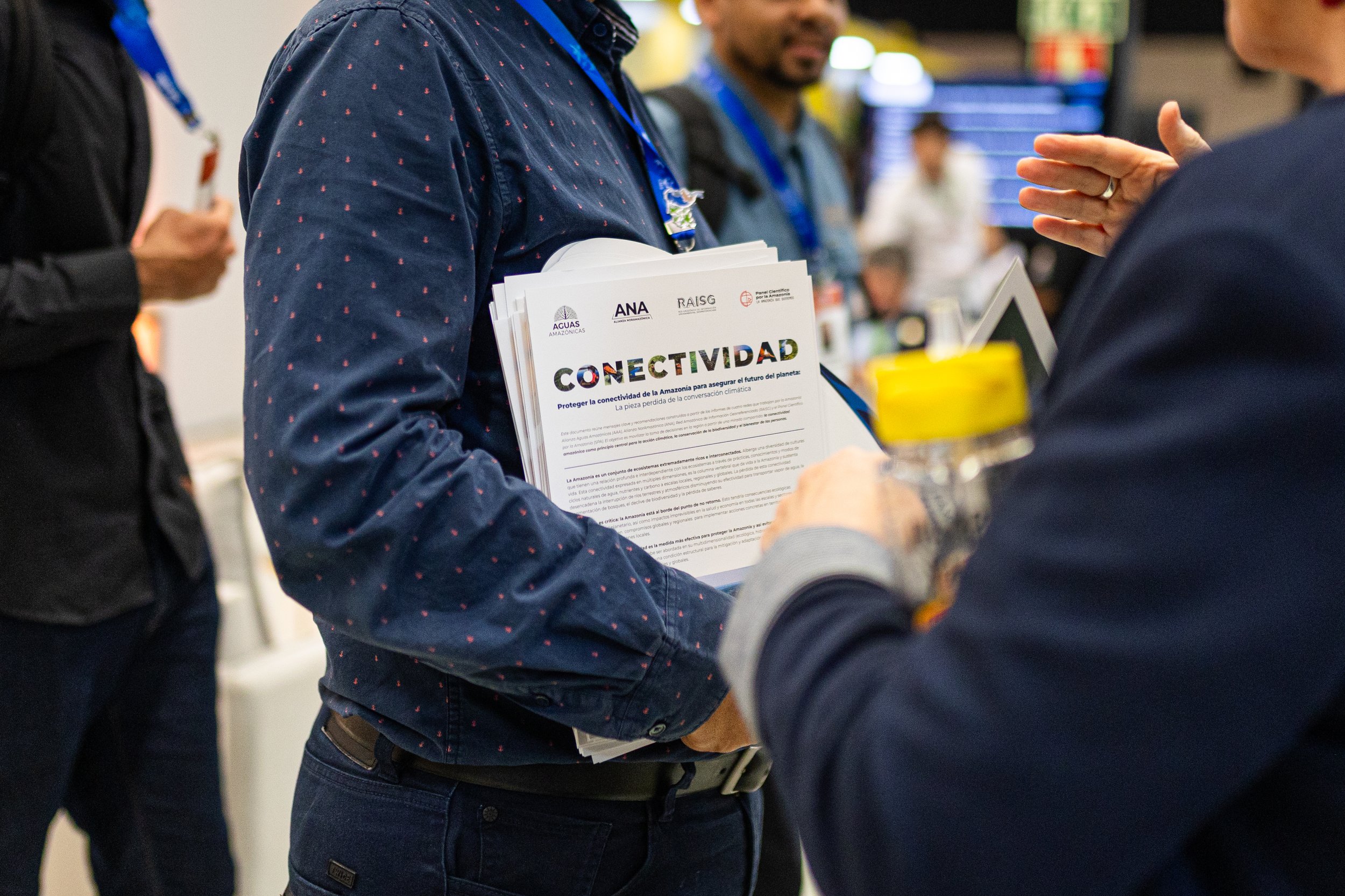
On March 25, 2026, the Science Panel for the Amazon (SPA) participated in a roundtable held during the 15th Conference of the Parties to the Convention on the Conservation of Migratory Species of Wild Animals (CMS COP15), in Campo Grande, Mato Grosso do Sul, Brazil. The event, titled “The Vital Role of Socioecological Connectivity in Conserving Freshwater Biodiversity and Local Livelihoods in the Amazon,” was co-organized by the SPA and the Amazon Waters Alliance (AAA), in collaboration with the Amazon Network of Georeferenced Socio-Environmental Information (RAISG) and the North Amazon Alliance (ANA).
The session brought together representatives from civil society, government institutions, academia, and fisher organizations to explore the role of socio-ecological connectivity in sustaining freshwater biodiversity and livelihoods across the Amazon Basin. The discussion highlighted the importance of multi-actor dialogue and collaboration to achieve ambitious conservation goals in the face of increasing pressures on migratory fish species, emphasizing the need for coordinated responses across multiple scales. Using the trans-Amazonian catfish, dourada (Brachyplatystoma rousseauxii), as an emblematic species, it underscored the deep interconnections between ecosystems, territories, and governance systems throughout the Amazon basin.

Guillermo Estupiñán - WCS, AAA
Opening the session, moderator Guillermo Estupiñán, Technical Secretary of the Amazon Waters Alliance, highlighted the collaboration between the SPA and other regional networks working to conserve Amazonian connectivity. He emphasized that connectivity across rivers, floodplains, and ecological systems remains a central condition for maintaining the Amazon’s ecological functions and supporting local livelihoods.
The roundtable featured three complementary presentations. First, Mariana Varese, Director of the Amazon Landscapes Program at the Wildlife Conservation Society (WCS), lead of the AAA Secretariat, member of the SPA’s Science Steering Committee, and SPA Lead Author, underscored the importance of participatory science, collaborative research and local knowledge in understanding and conserving migratory fish species across their full range. She highlighted the role of initiatives such as Ictio in generating reliable data through fisher-led monitoring, and stressed the need to strengthen data sharing and governance across the basin to inform decision-making.
Vanessa Rodríguez, social fisheries researcher at the Instituto del Bien Común and President of the AAA Board, focused on the role of knowledge dialogues among fishers. She emphasized how exchanges between Indigenous Peoples and Local Communities across different territories can strengthen leadership, improve fisheries governance, and bring forward locally grounded solutions. These processes, she noted, help bridge persistent gaps between scientific knowledge, public policy, and on-the-ground realities.
Carolina Doria, National Secretary for Fisheries Monitoring and Research at Brazil’s Ministry of Fisheries and Aquaculture and SPA Author, highlighted the socio-economic importance of migratory fish and presented scientific evidence on the impacts of large-scale infrastructure on migratory species . Drawing on studies of goliath catfish, she explained how hydroelectric dams such as Santo Antônio and Jirau have disrupted long-distance migration routes (e.g., 11.000 km), contributing to population declines. She also pointed to additional pressures, including land-use change, climate change, and overfishing, and called for stronger policy alignment and basin-wide governance approaches.
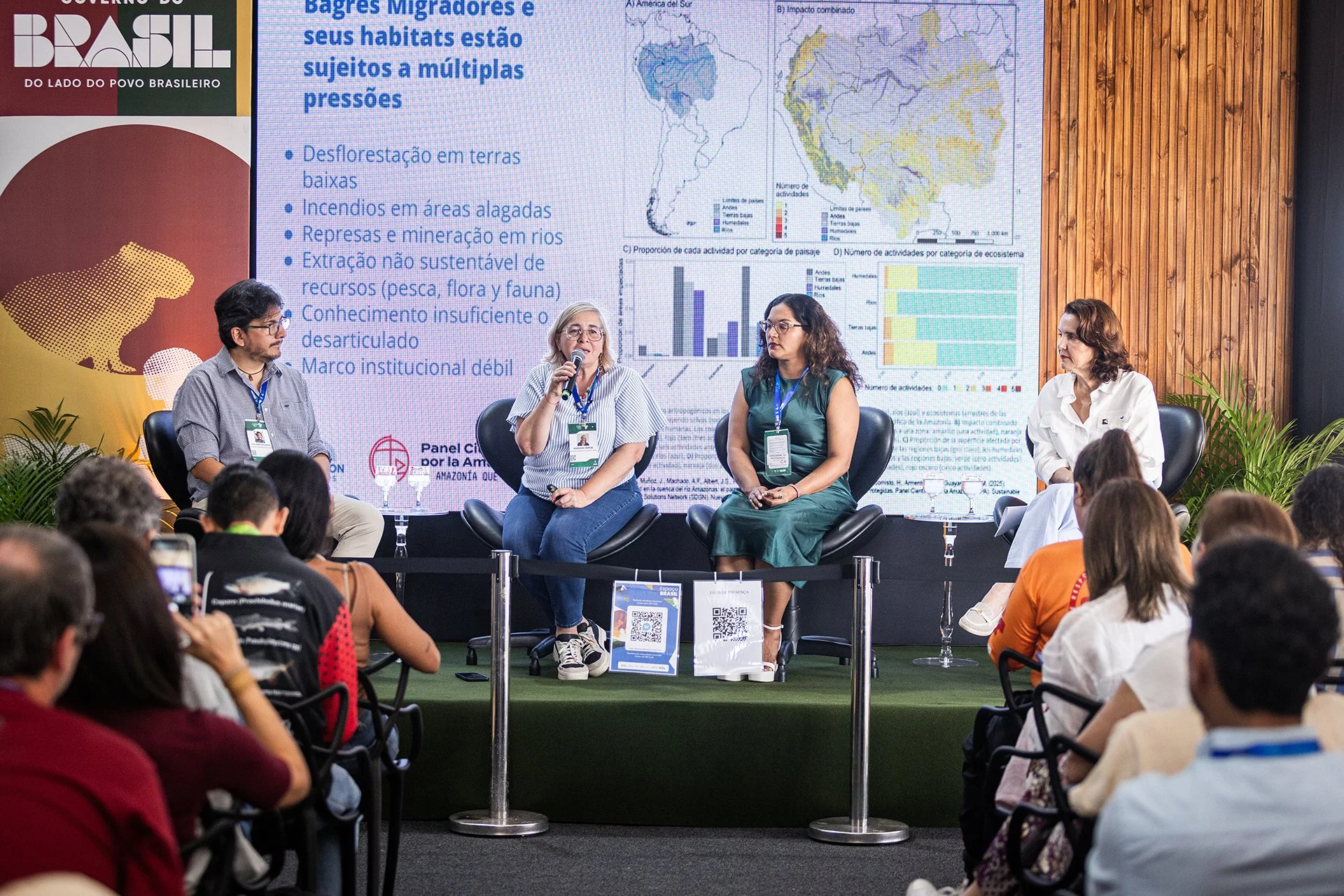
Mariana Varese - WCS, AAA, and SPA Author
Across the three interventions, a common message emerged: conserving Amazonian migratory fish requires coordinated action that integrates science, policy, and the knowledge and participation of Indigenous Peoples and Local Communities. Speakers emphasized that achieving this at scale depends on strengthening collaboration across institutions and territories, improving the use of existing scientific knowledge, and supporting inclusive governance systems.
The discussion that followed reinforced these points, with active participation from fisher leaders who shared their experiences and highlighted the importance of being directly involved in decision-making processes. Participants also discussed practical pathways forward, including collaborative monitoring systems, knowledge exchange platforms, and basin-scale management strategies.
The session also took place in a broader policy context marked by an important milestone at CMS COP15. Amazonian countries approved by consensus the Regional Action Plan for Amazonian Migratory Catfish, establishing a coordinated framework to conserve these species across the basin. The plan emphasizes the need to maintain river connectivity, strengthen scientific, Indigenous and Local Knowledge, and promote sustainable fisheries practices. This outcome reinforces many of the key messages highlighted during the roundtable, particularly the importance of basin-wide cooperation and integrated approaches to conservation.
The session provided an opportunity to position key messages from the SPA’s ongoing work on connectivity, particularly in relation to freshwater systems and migratory species. While focused and technical in scope, the event contributed to broader discussions at CMS COP15 on the importance of maintaining ecological connectivity to sustain biodiversity and livelihoods in the Amazon.
