
Amazon nearing tipping points: experts and civil society call for its inclusion in the global roadmap to halt deforestation at UNFF21
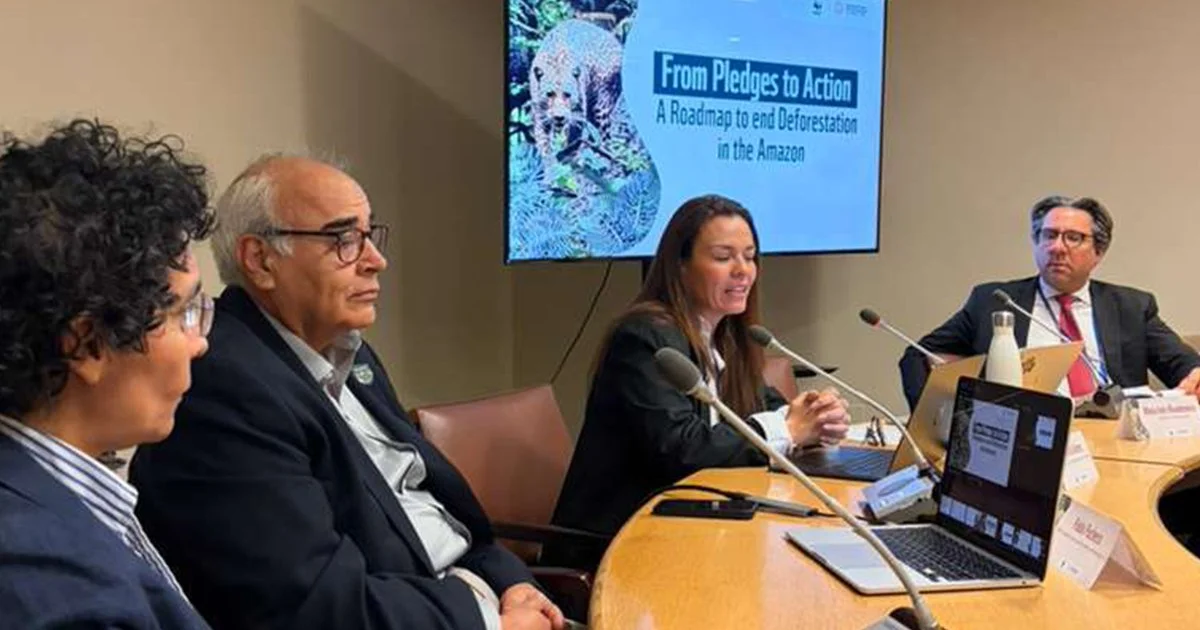
On May 15, 2026, the Science Panel for the Amazon (SPA) collaborated with WWF on an event titled "From Pledges to Action: A Roadmap to End Deforestation in the Amazon," in New York City, as part of the United Nations Forum on Forests (UNFF21). The event highlighted the critical moment the Amazon is facing, as it approaches deforestation thresholds that threaten global climate and ecological stability. It also aimed to share relevant scientific information and promote collective accountability for Amazon conservation, through expert interventions, the presentation of the Amazon Footprint Report, and the positioning of the Amazon League as a legitimate civil society contribution to the multilateral process.
Alexandra Gómez, Communications Lead for WWF's Amazon Coordination Unit, opened the event by outlining the current state of the Amazon. She emphasized the region is approaching a critical juncture and underscored the need to halt deforestation by 2030, noting that the Amazon — the world's largest rainforest — is central to climate stability, biodiversity conservation, and economic security, and must receive significant attention in multilateral discussions.
Next, Liliana Dávalos, SPA Author and Professor of Ecology & Evolution at Stony Brook University, spoke on how science can inform forest policy, drawing on two illustrative examples.
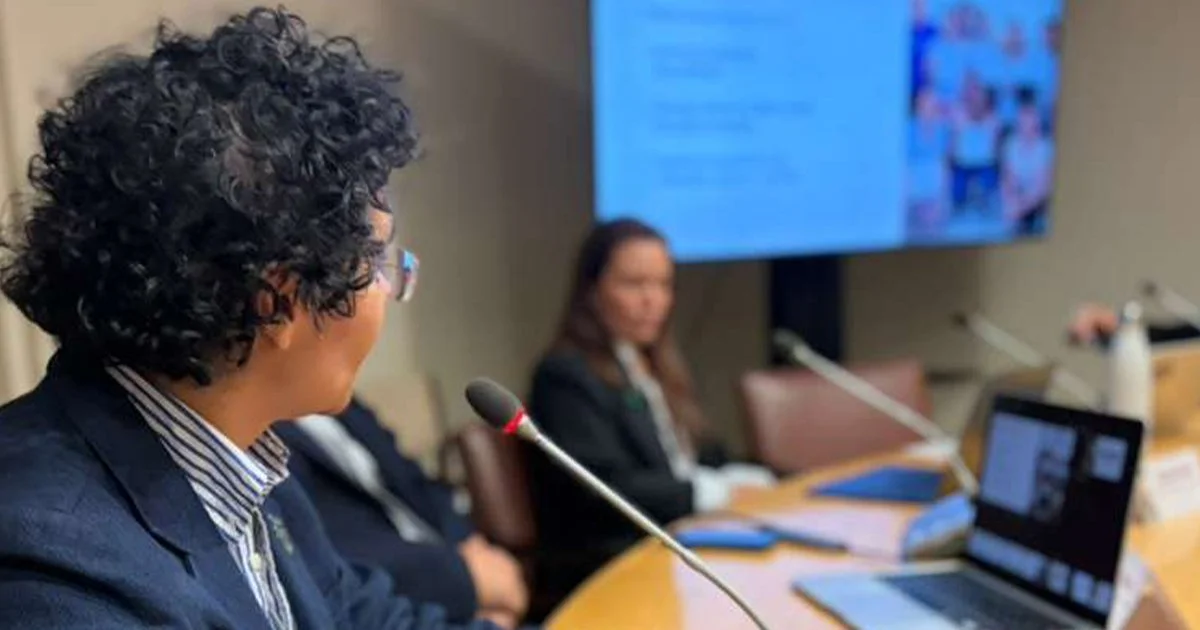
SPA Author, Liliana Dávalos
First, she highlighted the long-term impact of policy and scientific interventions, where decisions made decades ago continue to generate cascading effects today. She referred to the case of Colombia and Indigenous rights: in 1988, Fabio Trujillo led the creation of the Resguardo Indígena Predio Putumayo in La Chorrera (Amazonas), which eventually contributed to the establishment of many more protected areas and Indigenous Territories. Initially grounded in ethnography and human rights, the process had to be translated into policy-relevant language to reach decision-makers, an unprecedented effort in Latin America at the time. Conservation biology later reinforced these foundations. The creation of Indigenous Territories reshaped the landscape and set important precedents for other countries. Evidence from around the world has since consistently shown that when Indigenous rights are secured, conservation outcomes improve.
Second, she showed how policy can directly shape forest outcomes, using Brazil's Action Plan for the Prevention and Control of Deforestation in the Legal Amazon (PPCDAm) as an example. This policy was associated with a sharp decline in deforestation following earlier peaks, while also showing concurrent expansion in soybean and livestock production. Later policy changes eventually led to increased deforestation. PPCDAm's implementation drew on multiple scientific inputs: geography and spatial analysis helped prioritize hotspots of illegal deforestation; GIS and data science enabled timely detection and supported enforcement; and conservation science identified key policy targets embedded in legislation.
She concluded with a call for a clear roadmap toward policy-ready science: strengthening indirect pathways such as documentation and dissemination; directly addressing policy needs through co-design with decision-makers; and advancing applied science alongside more strategic funding approaches.
Pablo Pacheco, Global Forest Lead Scientist at WWF, then presented the main findings of the Amazon Footprint Report, developed in collaboration with Chalmers University of Technology, the Stockholm Environment Institute (SEI), and Trase. He highlighted that nearly 80% of deforestation in the Amazon is associated with pasture expansion for cattle ranching, while agricultural production (particularly soy, but also palm oil, coffee, and cocoa) contributes significantly to forest loss, both directly and indirectly.
"Thanks to this study, we now have clarity on the dynamics of deforestation at the subnational level across all Amazon countries, linked to both domestic and international markets, which allows us to identify concrete and targeted actions. This creates a real opportunity to reduce deforestation in the short term if public policy, institutional coordination, and market decisions can be aligned." — Pablo Pacheco.
In this context, advancing deforestation- and conversion-free (DCF) supply chains stands out as the most immediate and effective action available.
A high-level dialogue followed, moderated by María Inés Rivadeneira, Policy Lead at WWF Latin America and the Caribbean, with interventions from previous speakers Liliana Davalos and Pablo Pacheco, as well as Marco Tulio Scarpelli (Ministry of Foreign Affairs of Brazil and Coordinator of the COP30 Forest Roadmap), and Juan Carlos Jintiach (Executive Secretary of the Global Alliance of Territorial Communities).
Marco Túlio emphasized that regional cooperation is essential to achieve zero deforestation across the Amazon, highlighting the role of the Amazon Cooperation Treaty Organization (ACTO), which provides institutional infrastructure for real-time deforestation monitoring. Juan Carlos Jintiach stressed the importance of fully recognizing Indigenous Peoples: their governance structures, challenges, networks, agendas, and life plans; and ensuring these are respected and reflected in their own languages and terms.
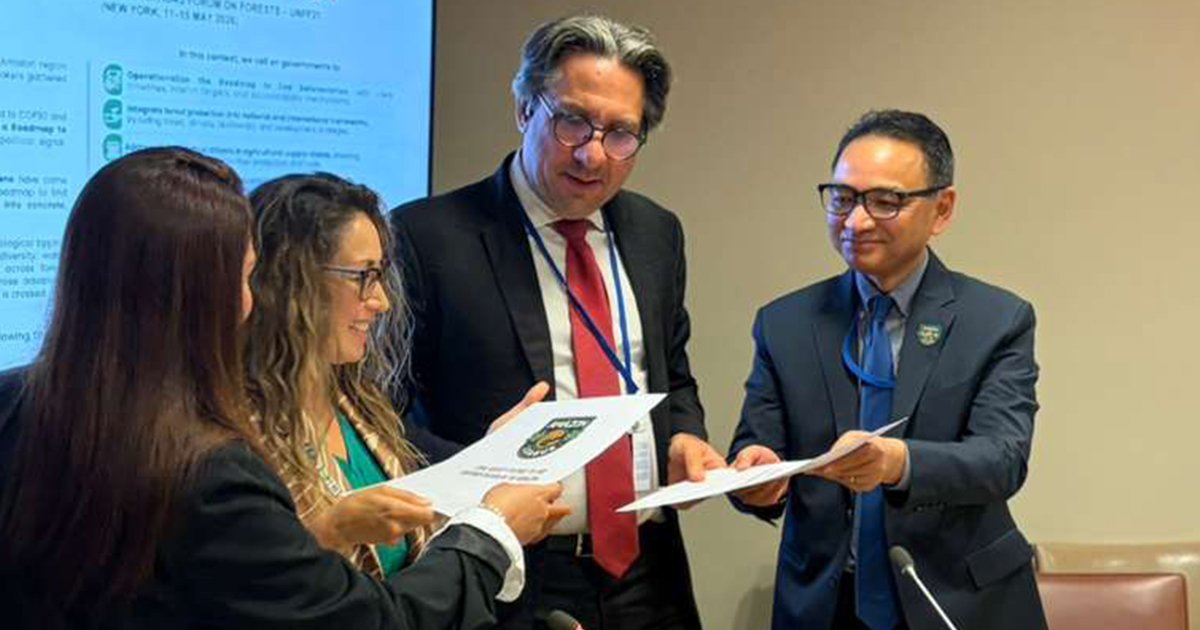
Formal hand-over of the Amazon League signatures to UN representatives
The event closed with Alexandra Gómez calling for sustained civil society pressure, noting that the Amazon League initiative aims to maintain momentum beyond COP30 and support implementation of the deforestation roadmap. To date, the campaign has gathered over 20,000 digital signatures, formally handed over to Marco Túlio Scarpelli and Minoru Takada, Deputy Director of the United Nations Forum on Forests Secretariat.
"These signatures reflect an increasingly clear reality: society understands that protecting forests means protecting life itself. Forests are directly connected to the water we consume, climate stability, food security, health, and the quality of life of millions of people. This is no longer only a call from environmental organizations; it is a growing demand from society to accelerate investments and decisions that can secure a safer, more resilient, and sustainable future for all." — Alexandra Gómez.
Participants agreed that the Amazon represents both the greatest risk and the greatest opportunity. There is sufficient evidence, knowledge, and experience to halt deforestation. The outcome will depend on the speed at which these solutions are implemented.
The Amazon is one of the most strategic and urgent regions for global action. Experts, organizations, and civil society are calling for its integration into the international roadmap to halt deforestation, before the region crosses its tipping point. Only by strengthening the interfaces between science, policy, and Indigenous and local communities can we halt deforestation, avoid irreversible loss, and advance a new model of sustainable development. The COP30 Presidency's roadmap must incorporate science, data, and practical tools to make this possible — toward #TheAmazonWeWant.
To learn more, read SPA's contribution to the UNFCCC COP30 Presidency Roadmap to Halting and Reversing Deforestation and Forest Degradation by 2030.
