
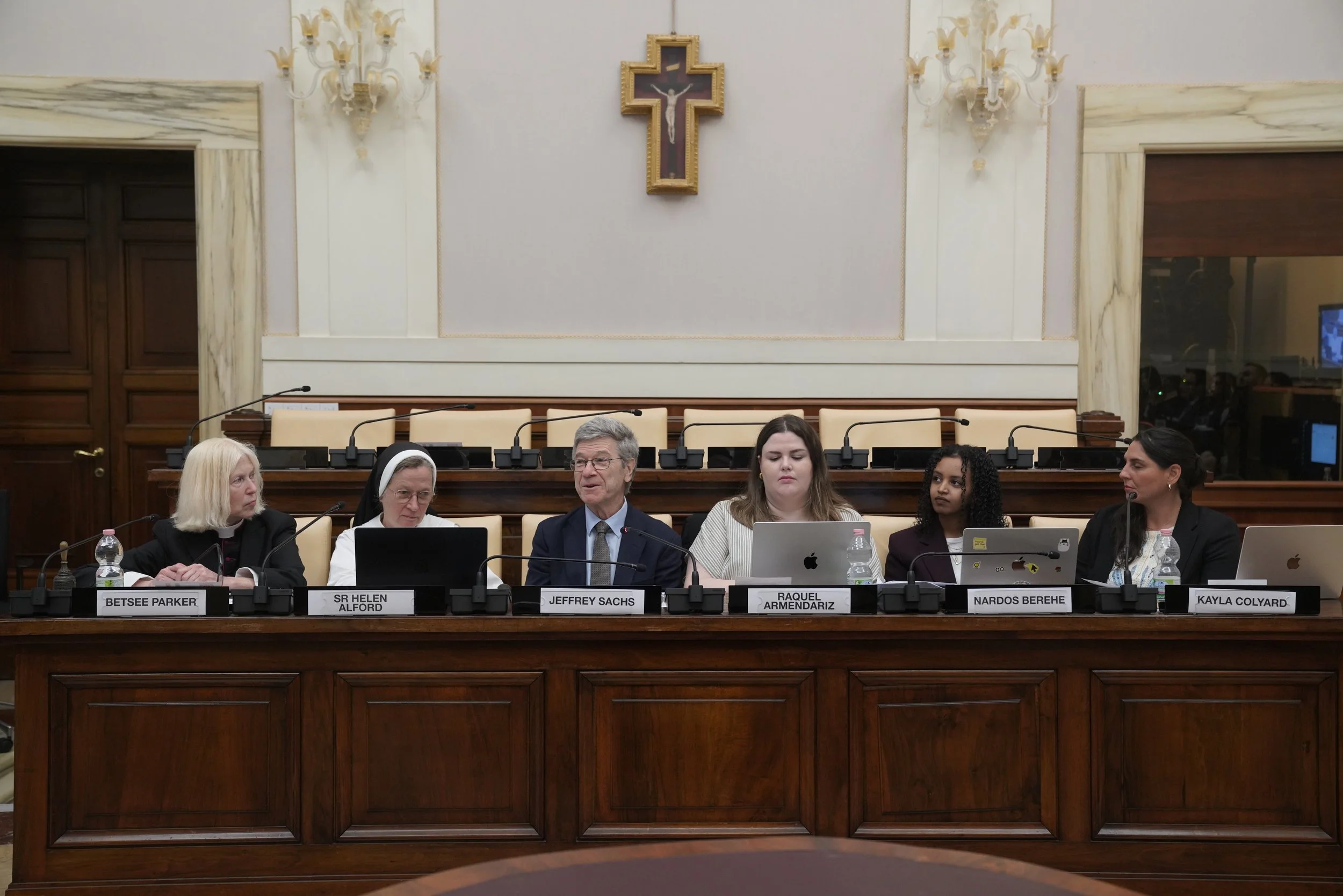
In October 2026, Anaïs Salabert represented the Science Panel for the Amazon’s (SPA) Youth Advisory Committee (YAC) at the 10th Vatican Youth Symposium and participated in the World Food Forum at the headquarters of the Food and Agriculture Organization of the United Nations (FAO) in Rome, Italy. Across these two international spaces, she brought perspectives from the Amazon to discussions on sustainable development, community resilience, and food security.
Youth Leadership and Community Resilience at the Vatican
Held on October 8–9 at the Casina Pio IV in Vatican City, the 10th Vatican Youth Symposium (VYS) was co-hosted by the Pontifical Academy of Social Sciences and SDSN Youth. Under the theme “Safeguarding Our Common Future: From Vision to Collective Action,” the gathering brought together young leaders and experts to explore how collaboration and collective action can advance sustainable development.
Speaking in Session V, “Shared Spaces, Shared Lives: Building Inclusive Communities,” Anaïs highlighted how youth networks, healthy ecosystems, and community-led decision-making can strengthen resilience across the Amazon.
Drawing on her experience in Maripasoula, French Guiana, she described how severe drought disrupted river transportation, food supplies, access to drinking water, and schooling. These experiences underscored the importance of connecting environmental sustainability with the well-being of local communities. As she emphasized, “Sustainability and resilience must go hand in hand.”
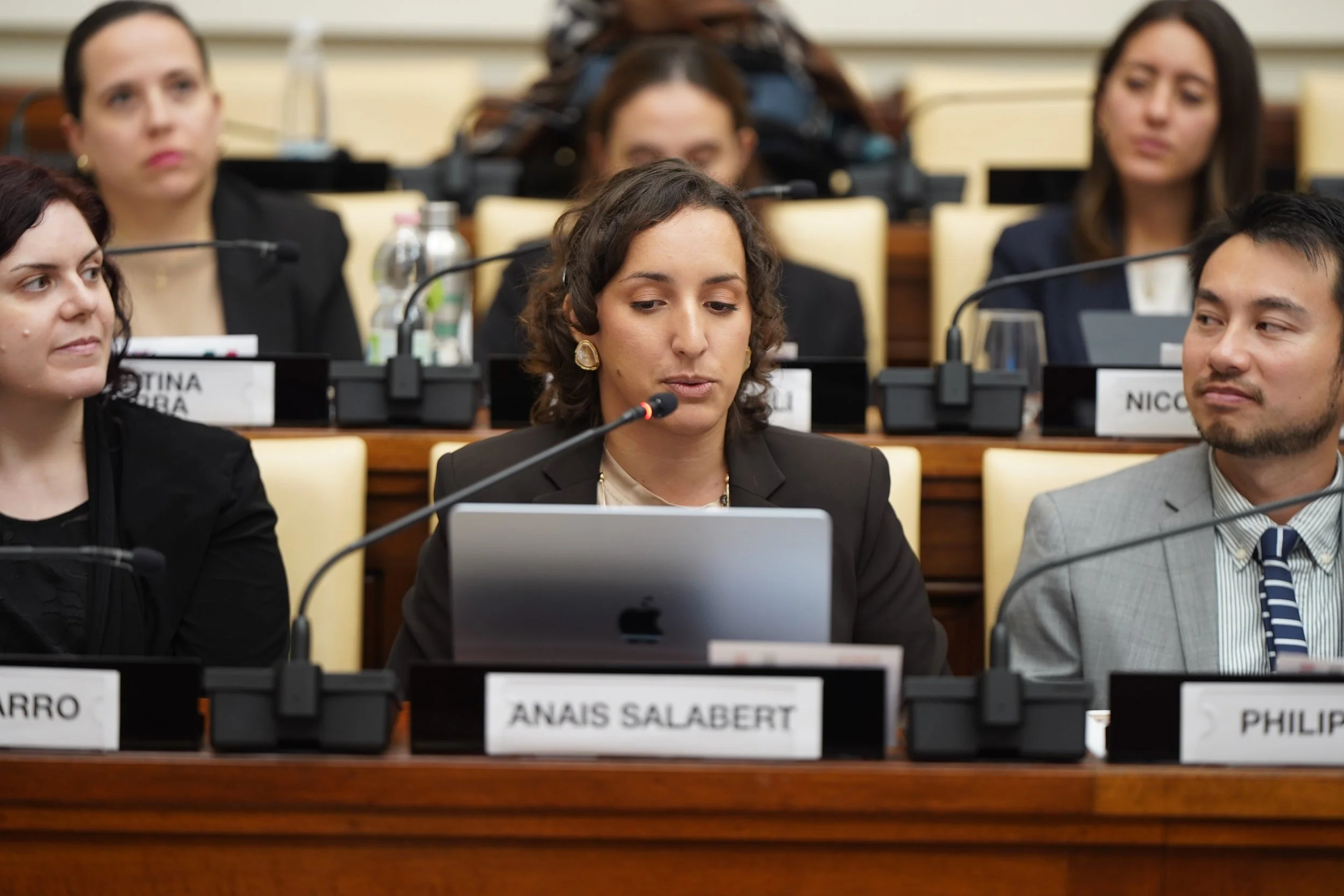
Anaïs Salabert at the VYS
Anaïs also reflected on the YAC’s work bringing together more than 200 young people from across the Amazon region to develop the Amazon Youth Manifesto. Beyond producing a shared statement, this process helped build connections among young people committed to the region’s future.
She further highlighted the importance of Indigenous and Local knowledge, cultural exhange, and locally adapted solutions, stressing that inclusion must translate into meaningful decision-making authority: “Local governance must go beyond consultation and give communities real decision-making power over their territories.”
Amazonian Perspectives on Food Security and Education at FAO
From October 8–16, the World Food Forum brought together young people, scientists, policymakers, and partners at FAO headquarters in Rome and online. The Forum provides a global platform for advancing sustainable agrifood systems through youth action, science, innovation, and collaboration.
Anaïs participated in a research interview for “Enhancing Global Food Security Education: A Comprehensive Evaluation of Educator Engagement and Development Programs.” Drawing on her experience as a teacher in French Guiana, she contributed to research examining the reach, impact, and future directions of global education programmes related to food security and agrifood systems.
SPA author Juliana Sánchez Castellanos also contributed to the Forum’s discussions. In the session “Biocentrism for Indigenous Peoples in the Context of Climate Change & Rights of Nature,” she addressed Amazonian Indigenous food systems in relation to Indigenous values, conservation, and the rights of nature. She also co-presented the methodology and main findings from the first phase of the Regional Assessment of Indigenous Food Systems during the Global Drafting Committee session, “Amazonian Indigenous Food Systems: Living Connectivity for Amazon Resilience.” The Regional Assessment on Amazonian Indigenous Food Systems was developed by the Regional Working Group on Amazonian Indigenous Food Systems of the North Amazon Alliance (ANA), under the leadership of Juliana Sánchez.
Together, these contributions brought attention to the connections between food systems, education, Indigenous Peoples’ rights, and the ecological and sociocultural relationships that sustain the Amazon.
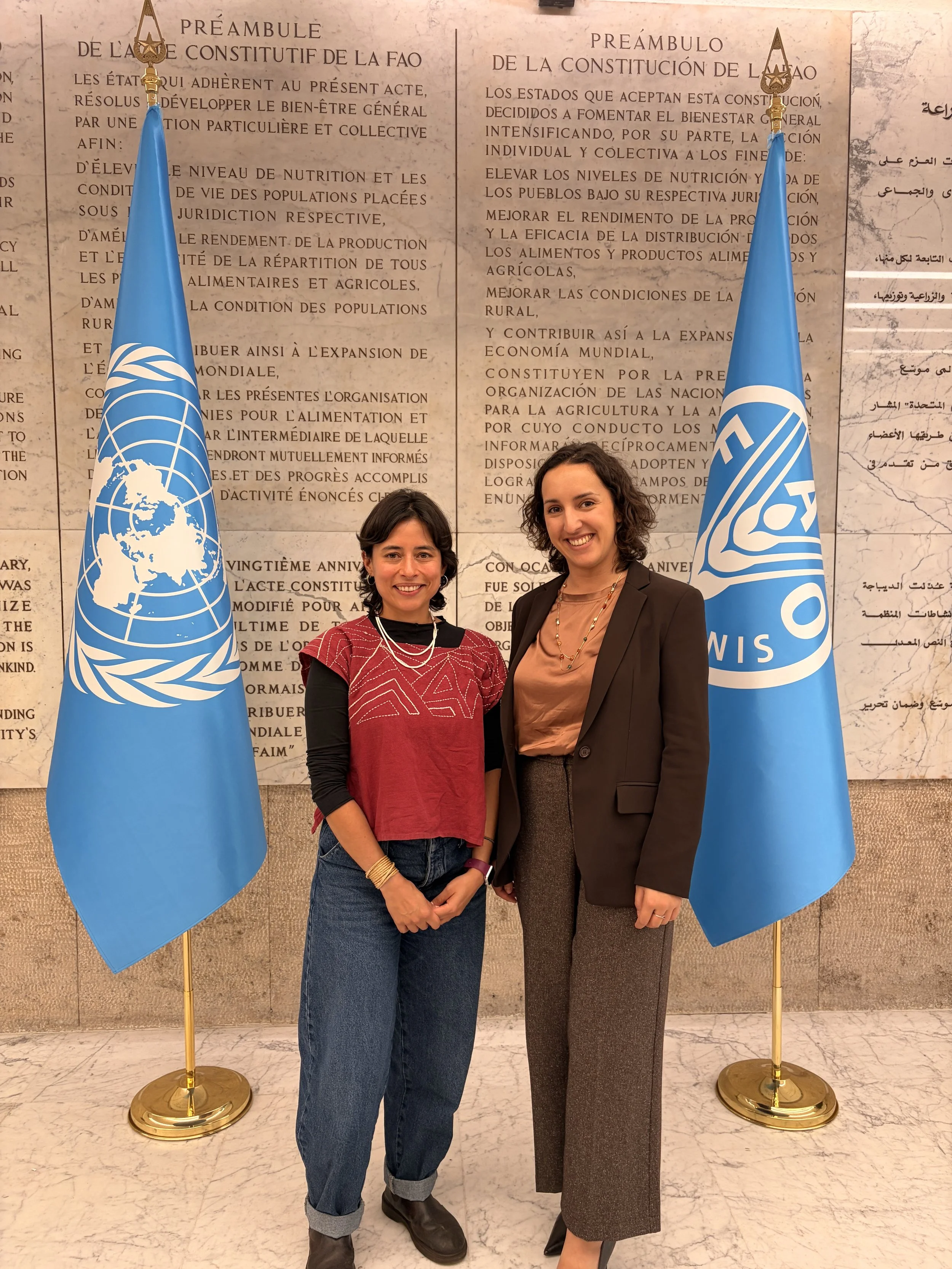
Juliana Sánchez and Anaïs Salabert
Connecting Youth, Knowledge, and Action for the Amazon
Anaïs’s participation in these two spaces reflects the importance of bringing experiences and perspectives from the Amazon into international conversations on sustainable development. From community resilience and youth leadership to education and food security, these discussions reinforced a central message: the future of the Amazon depends on healthy ecosystems, the recognition of Indigenous Peoples’ rights and knowledge, and meaningful participation by the communities who live in the region.
Through the YAC and its growing alumni network, the SPA continues to strengthen connections between young people, scientific knowledge, and the wider discussions shaping the future of the Amazon and the world.
