
November 12, 2026 | By: Gabriela Merizalderubio (WCS)
The analysis highlights the importance of rivers for biodiversity, fishing, and food security, recommending measures to prevent the impact of new dams and ecosystem fragmentation.
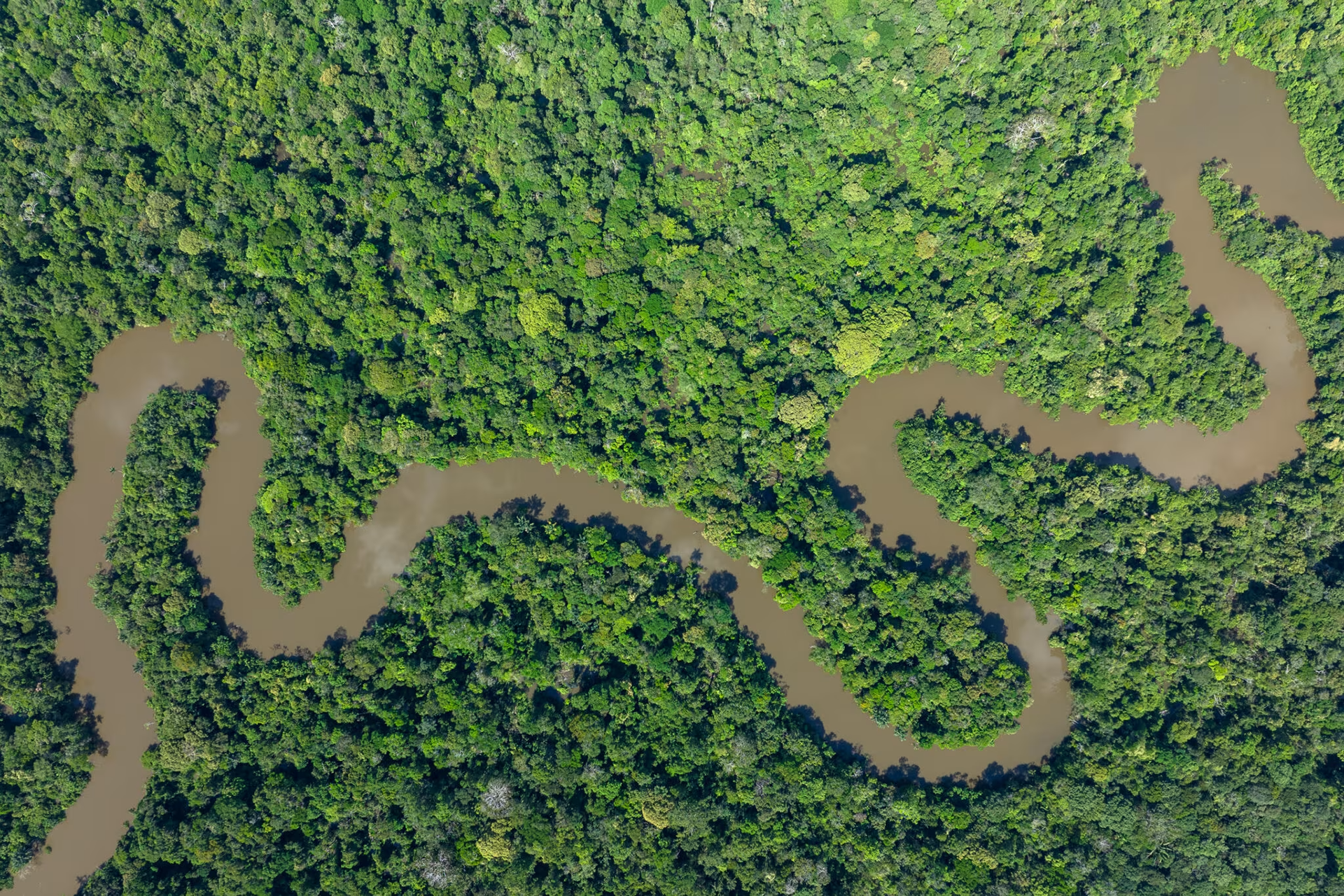
The Içá River is included in the analysis of free-flowing rivers in the Brazilian Amazon.
Photo: © Marcos Amend / WCS Brasi
A river is not just flowing water: it is a pathway where fish travel up and downstream, sediments fertilize floodplains, and riverside communities draw their livelihoods. This connection between river stretches, their tributaries, and their flooded areas is what scientists call connectivity, and it can be altered by various human activities, such as the construction of dams.
A study identified 19 priority rivers for maintaining that connection in the Brazilian Amazon and recommends protecting them from new hydroelectric plants and other infrastructure that fragment their channels. Among them is the Amazon/Solimões, described in the document as the longest river in the world that still has no interruptions. Others, such as the Branco, the Tapajós, and the Xingu, are under pressure from projects or from dams already in place.
The report Connectivity First: Free-Flowing Rivers for the Brazilian Amazon was a joint effort between the Amazon Waters Alliance, the Science Panel for the Amazon, Stanford University, The Nature Conservancy (TNC), Wildlife Conservation Society (WCS), and WWF.
"Amazonian rivers connect ecosystems, species, and communities across the entire basin, and a single dam is enough to break that connection, with cumulative impacts downstream. This list is not a ranking by priority level, nor does it mean overlooking other rivers: it brings together those that are relevant for guiding public policy. Currently, Brazilian legislation does not have instruments that protect the free-flowing condition of a river. For this reason, the study highlights the need to incorporate this perspective into planning and to prevent new infrastructure from compromising the systems that still maintain their functioning," says Mariana Frias, conservation analyst at WWF-Brazil.
The study divides the 19 rivers highlighted as priorities into two groups:
– 14 free-flowing rivers: Amazon/Solimões, Purus, Juruá, Javari, Jutaí, Içá, Japurá, Negro, Guainía, Branco-Uraricoera, Trombetas, Aripuanã, Canumã, and Guaporé/Itenez. For these rivers, preventive action is recommended, before they become fragmented.
– 5 rivers that maintain good connectivity over long stretches despite alterations: Madeira, Tapajós, Xingu, Araguaia, and Juruena. For these, the goal is to avoid further losses and restore the connectivity they still retain.
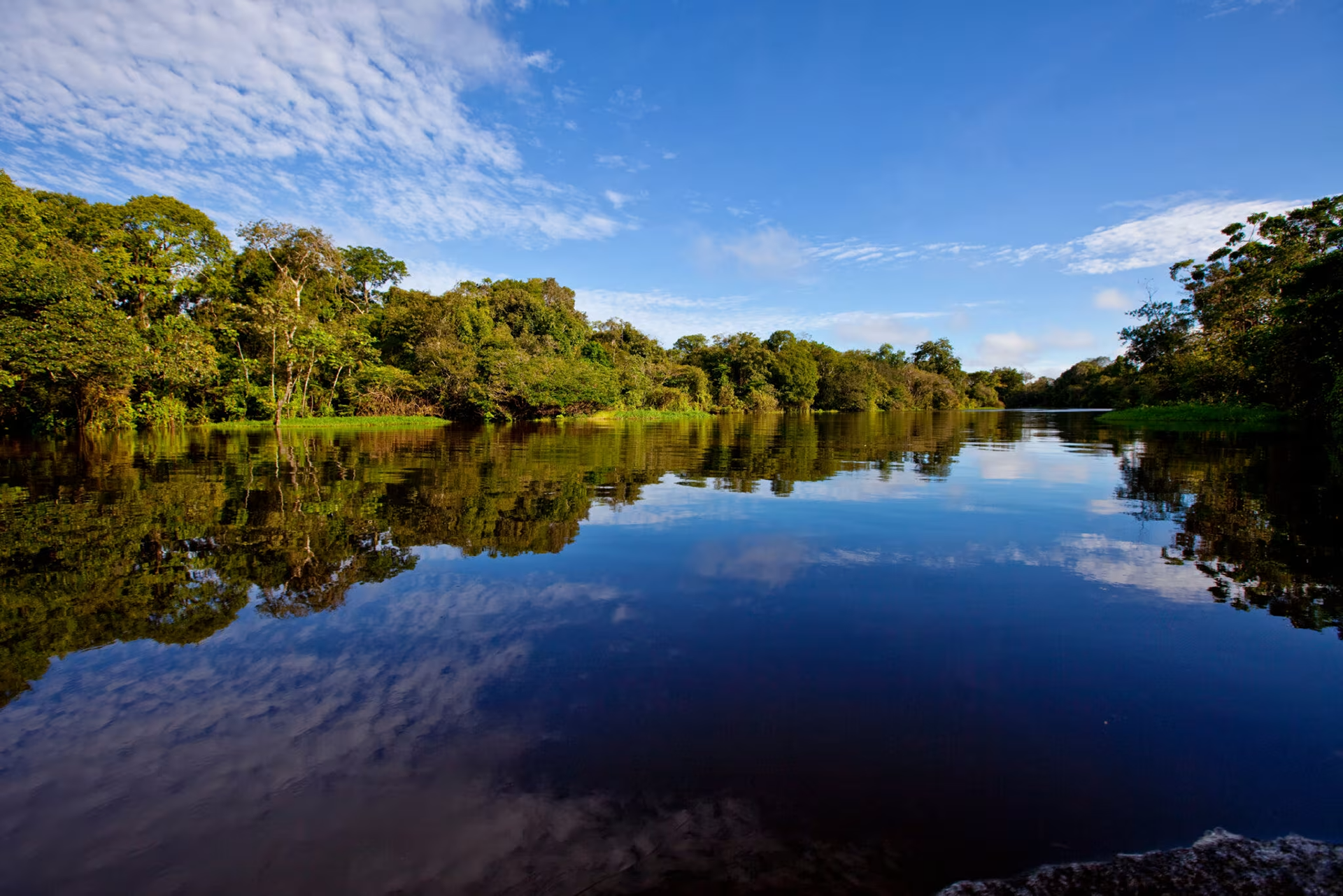
Stretch of the Amazon River in Brazil. Photo: © AltrendoImages
Connectivity Is Fundamental to Biodiversity
When a dam is built on a river, the impact goes beyond the physical barrier. According to the study, the dorado (Brachyplatystoma rousseauxii) undertakes the longest known freshwater migration, up to 5,786 km, between the estuary and the foothills of the Andes. It is currently classified as Vulnerable (VU) by the IUCN due to the impacts of the hydroelectric plants on the Madeira River. Estimates indicate that up to 93% of Amazonian fisheries depend on migratory species.
Amazonian dolphins also depend on connected rivers. The pink river dolphin (Inia geoffrensis), classified as Endangered (EN) by the IUCN, has the highest recorded population densities in the middle and lower Purus. The Madeira River, although fragmented, still hosts two species of dolphins of the genus Inia. For its part, the Araguaia river dolphin (Inia araguaiaensis), the only Amazonian dolphin species exclusive to Brazil, has the Araguaia River as its only free-flowing habitat. For this reason, dolphins were one of the biodiversity layers considered in the analysis, along with long-distance migratory fish and turtles.
Rivers also carry sediments from the Andes (about 90 to 93% of the load transported by the Amazon) and fertilize the floodplains. The fishing productivity and the várzea açaí of the estuary depend on that fertility. On the Madeira, the downstream transport of sediments from the Santo Antônio and Jirau plants decreased by about 20%. Large dams, especially on the Madeira and the Xingu, increased the fragmentation of the Amazon river network by about 40% in roughly a decade. At Belo Monte, an estimated 40,000 people were displaced, including riverside communities.
Globally, only about one third of large rivers longer than 1,000 km remain unfragmented. "The dorado that is born at the foot of the Andes and grows in the estuary, the dolphins, and the turtles all depend on the same corridors. When a dam interrupts the river, the impact is not limited to one place; it spreads across the entire system and reaches the communities that live off fishing. That is why the time to act is now: most of the identified rivers still flow freely, which gives us the opportunity to act preventively. Maintaining connectivity before it is fragmented is much more effective than trying to recover it afterward," says Dino Delgado, Director of the Amazon Waters Program at WCS, representative of the Technical Secretariat of the Amazon Waters Alliance, and first author of the study.
Study Recommendations
Binding exclusion zones: designate the identified rivers as exclusion zones for hydroelectric plants and other infrastructure that interrupts connectivity. The restriction should apply to federal energy planning instruments (PDE and PNE 2050) and to the concession and bidding processes of Brazil's National Electric Energy Agency. According to the document, a merely indicative designation "will not hold."
Legal recognition: create a legal pathway to recognize free-flowing rivers as conservation objects, given that no current instrument (such as the National Water Resources Policy, the SNUC, and the APPs) protects that condition.
Basin-scale assessment: adopt Strategic Environmental Assessments before licensing new projects. The study notes that this process in Brazil still evaluates projects in isolation, and recent legislative changes that weaken licensing worsen this gap.
Rights of Indigenous Peoples and Local Communities: guarantee Free, Prior and Informed Consent for works that affect rivers.
National commitments: incorporate river protection into the National Biodiversity Strategy and Action Plans, the Nationally Determined Contributions, and Targets 2 and 3 of the Global Biodiversity Framework.
Governance and monitoring: strengthen cooperation among Amazonian countries through ACTO and create a coordinated system for monitoring connectivity, fish populations, and sediment dynamics.
The analysis focuses on the Brazilian Amazon, but recognizes that the basin is transboundary and that several of the identified rivers originate in neighboring countries. For the authors, conserving free-flowing rivers does not preclude energy security: the study advocates a transition based on lower-impact sources, such as solar and wind power, and points to the growing risks that climate change poses to the viability of new hydroelectric plants in the Amazon.
"Only about one third of the world's major rivers still flow freely, and the Amazon is the longest of them. It is a natural heritage that we can still preserve. Conserving these rivers does not mean compromising energy security. Solar and wind power, energy efficiency, storage systems, and proper planning of new dams make it possible to meet energy demand without putting at risk the rivers that sustain fishing, food security, and the livelihoods of millions of people," says Michelle Thieme, Vice President of Freshwater at WWF-US.
How Was the Study Conducted?
The analysis prioritized rivers of fifth order or higher, that is, the largest in the basin, formed by the confluence of smaller tributaries, and used the Connectivity Status Index as its main technical criterion. It also took into account the presence of long-distance migratory fish and Amazonian dolphins, fishing importance, connectivity between Protected Areas, water types, and species richness weighted by rarity.
Access the study "Connectivity First: Free-Flowing Rivers for the Brazilian Amazon":
